WTTC’s Lefebvre: Tourism Winners Will Choose Precision Over Promotion
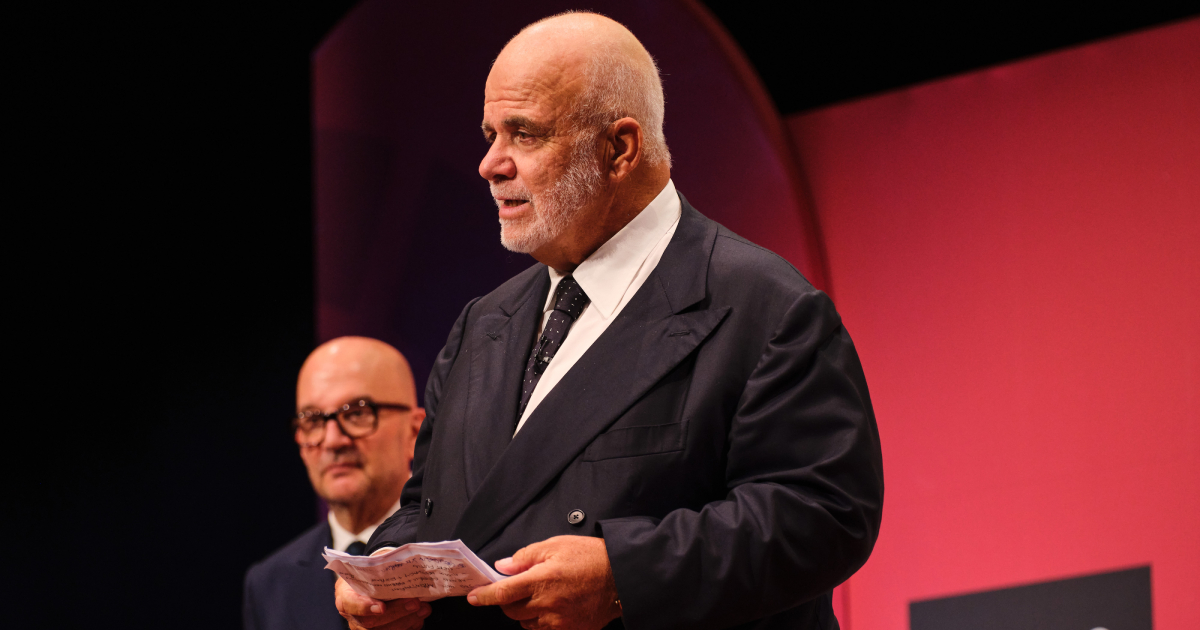
Madrid – Halfway through 2026, World Travel & Tourism Council (WTTC) Chairman Manfredi Lefebvre d’Ovidio has delivered what may become one of the defining assessments of the global tourism economy this year. His message was simple but powerful: global tourism continues to outperform the broader economy, yet success is becoming increasingly uneven.
“Halfway through 2026, the data is telling its story.”
According to Lefebvre, WTTC forecasts that Travel & Tourism will contribute US$12 trillion to the global economy in 2026, expanding by 3.2%, compared with projected global economic growth of 2.4%. Yet beneath those headline numbers lies a very different reality.
“Same tailwind, different outcomes,” Lefebvre observed.
The destinations outperforming competitors are no longer simply those blessed with iconic attractions or famous brands.
“The destinations pulling ahead aren’t always the most famous; they’re the ones treating differentiation as strategy, not slogan. The second half will reward precision over promotion.”
For those who have followed Lefebvre’s career, the observation is consistent with a philosophy he has championed for decades. His often-quoted maxim, “Nothing should stand between you and the authentic beauty of the world,” reflects his conviction that successful tourism is ultimately about removing barriers—whether physical, political or perceptual—between travelers and genuine experiences. His latest economic assessment suggests destinations embracing authenticity rather than relying solely on promotion are now seeing the greatest rewards.
Geography Is No Longer Destiny
WTTC Welcomes Manfredi Lefebvre as New Chair at Global Summit Opening Ceremony
Read WTTC’s press release to learn more.
WTTC’s latest outlook paints a fascinating global picture.
Asia-Pacific and Africa lead world tourism growth at 5.4%, while Europe continues to outperform its own economy by nearly four-to-one, expanding 3.6% against overall economic growth of just 1%. Italy tops Europe’s major tourism economies with 3.8% growth, followed closely by Spain and Türkiye at 3.7%.
North America, however, tells a different story.
Growth of just 2.3% masks an even more concerning development in the United States, where international visitor spending has declined by approximately US$19 billion compared with last year, driven largely by fewer visitors arriving from Europe and Canada—even while international tourism continues expanding globally.
For an industry that has traditionally viewed the United States as one of the world’s tourism powerhouses, the figures represent a significant warning.
Leadership During Uncertain Times
When Manfredi Lefebvre speaks, governments, tourism ministers and industry leaders tend to listen.
A pioneer of luxury tourism who transformed Silversea Cruises into a global brand before leading Heritage Group and Abercrombie & Kent Travel Group, Lefebvre became WTTC Chairman following more than two decades as one of the organization’s most influential members.
Under his chairmanship, WTTC has regained considerable momentum. The return of CEO Gloria Guevara reunited one of tourism’s most experienced leadership teams, widely viewed by many industry observers as a “dream team” at a time when tourism faces unprecedented geopolitical challenges while simultaneously experiencing one of the strongest periods of growth and resilience in modern history.
Together, Lefebvre and Guevara have repositioned WTTC at the center of global tourism policy discussions, bringing governments and private-sector leaders together to navigate an increasingly complex international landscape.
Earlier this year, WTTC demonstrated that philosophy by convening its first-ever Leadership Cruise through the Suez Canal, gathering ministers, CEOs, investors, and former heads of state to discuss resilience, recovery, and international cooperation amid continuing global uncertainty.
The Evidence Economy
One of the most insightful reactions to Lefebvre’s observations came from travel technology entrepreneur Ryan McElroy, founder of Travel Agency Tribes and a respected innovator in travel marketing technology.
McElroy believes tourism has entered an entirely new competitive era.

“Thanks for sharing the raw data and your perspective, Manfredi. This reinforces something I’ve been thinking about recently: we’re moving into an evidence economy.”
His observation goes well beyond marketing.
“Destinations can no longer rely solely on awareness. They need evidence of why travelers should choose them and why advisors should recommend them. Differentiation backed by proof is becoming far more powerful than promotion alone.”
His comments reinforce Lefebvre’s central thesis. Success is increasingly determined not by who spends the most on advertising, but by who can demonstrate genuine value, authenticity and measurable visitor experiences.
Luxury Tourism Offers a Preview
Lefebvre has long maintained that luxury tourism often provides an early glimpse into where the broader industry is heading.
Throughout his career, he has argued that luxury is no longer measured by excess, but by access—to culture, people, heritage and authentic experiences. That philosophy is captured in one of his best-known statements:
“Nothing should stand between you and the authentic beauty of the world.”
Far more than a marketing slogan, it has become a guiding principle for Lefebvre’s vision of tourism.
Speaking earlier this year about the future of travel, he observed that today’s travelers increasingly seek transformation rather than consumption.
“People are looking for something deeper… authentic, immersive and emotionally rich experiences.”
He believes the future belongs to “more conscious travellers, who choose quality over quantity, connection over convenience.”
His latest economic assessment suggests that destinations embracing this philosophy are increasingly outperforming competitors. Authenticity, supported by evidence rather than slogans, is becoming one of tourism’s strongest competitive advantages.
Precision Is Becoming Tourism’s Competitive Advantage
The contrast between Europe’s continued strength and America’s decline illustrates Lefebvre’s broader point.
Global tourism demand remains robust.
The question is no longer whether people will travel—it is where they will choose to go, and why.
The traditional assumption that famous destinations automatically attract visitors is giving way to a far more sophisticated marketplace where policy, connectivity, visitor experience, sustainability, authenticity and measurable differentiation determine success.
As the second half of 2026 unfolds, Lefebvre’s message extends beyond economics. It represents a blueprint for the future of tourism itself. Destinations that eliminate barriers, embrace authenticity and can prove their value will increasingly outperform those relying on reputation alone.
Or, as Manfredi Lefebvre has said throughout his career:
“Nothing should stand between you and the authentic beauty of the world.”
Combined with his latest assessment that “the second half will reward precision over promotion,” the message is unmistakable. Tourism’s next generation of leaders will not simply promote destinations—they will create authentic experiences that travelers trust, remember and eagerly recommend.


