175 Spain Trivia Questions and Answers From Easy to Hard – How Much Do You Really Know?
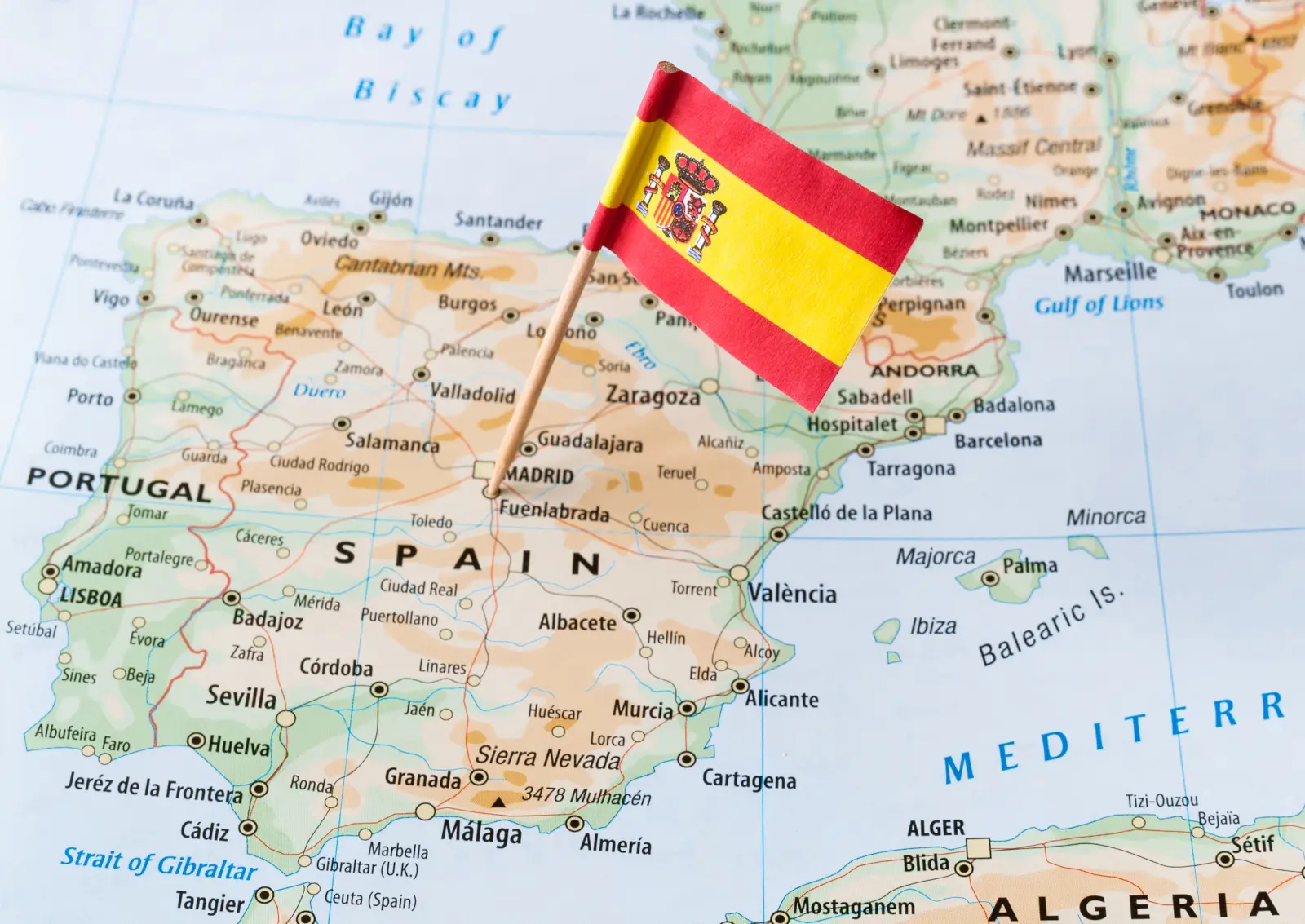
This post may contain affiliate links. If you click on one and make a purchase, I might earn a small commission (at zero extra cost to you), which helps me keep this blog running.
After I published my article with interesting facts about Spain, people began mentioning it to me offline. A few told me which details had surprised them most, and the article also continued to attract readers almost every day. That response gave me the idea for a larger challenge: instead of simply reading the facts, how many could you answer?
I started collecting questions and kept finding details that were too good to leave out. The result is a 175-question Spain trivia quiz that begins with familiar answers and becomes harder gradually. A few facts surprised me while I was checking them too.
I highly recommend you yto go through the entire Spain trivia questions with answers. You will be surprised how many right answers you can offer for 9 and 10, while round 11 might surprise you!
Keep score as you go, play alone, or read the questions aloud with family and friends. The answer sits directly below each question, so scroll carefully when you don’t want to see it too soon.
ID 36255106 ©Sjankauskas | Dreamstime.com
The answers were checked against authoritative historical, cultural, geographic, sporting, and institutional sources. Facts likely to change quickly were left out.
Round 1: Easy Spain Trivia Questions
A few familiar answers make it easier to settle into a long quiz. These easy Spain trivia questions cover basic geography, symbols, food, and places that many international readers will recognize, while the wider world capitals quiz is there when you feel ready to keep going.
1. What is the capital of Spain?
Answer: Madrid.
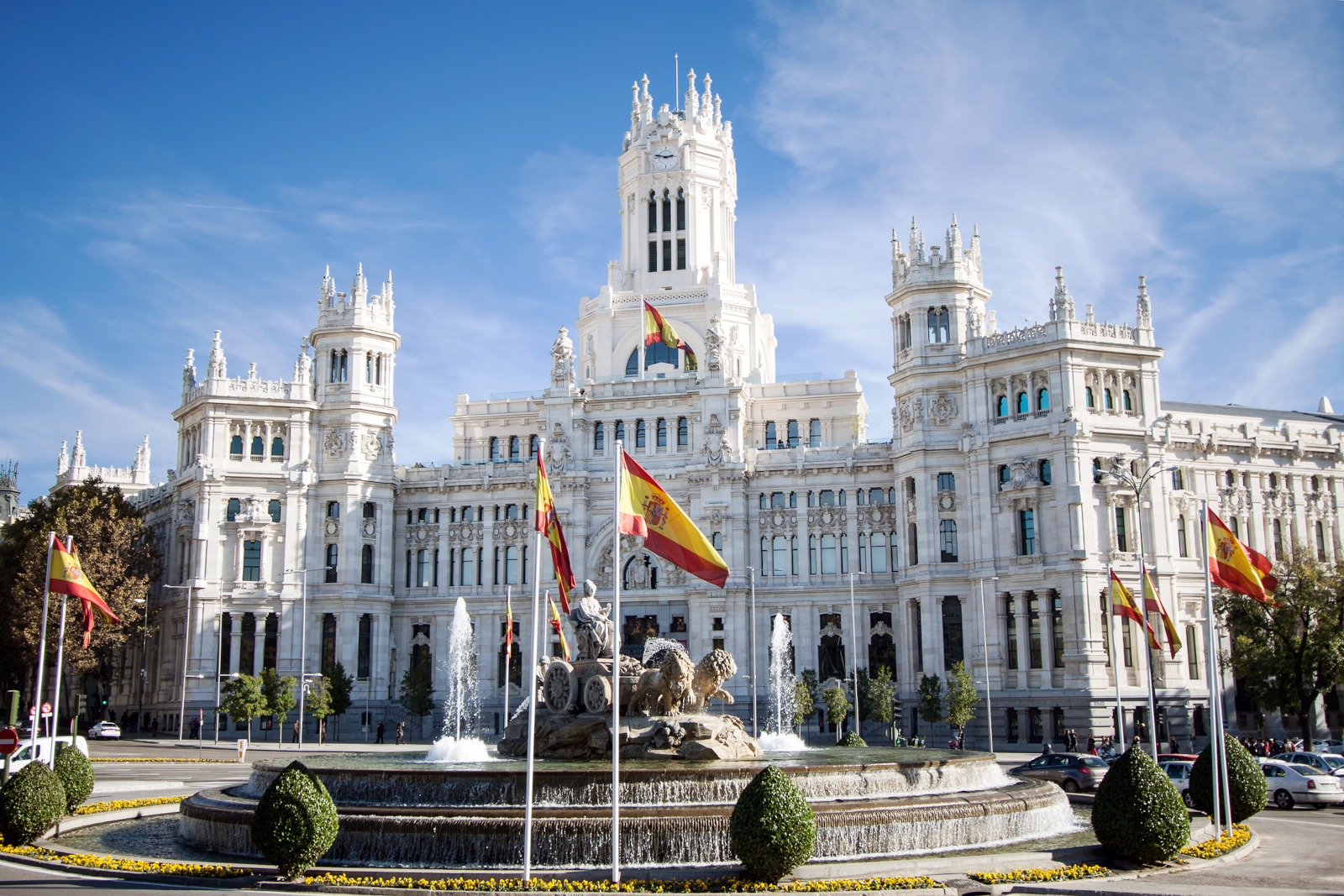
ID 58901542 ©Sbostock | Dreamstime.com
2. What currency is used in Spain?
Answer: The euro.
3. What is Spain called in Spanish?
Answer: España.
4. Which two colors dominate Spain’s national flag?
Answer: Red and yellow.
5. On which European peninsula is most of Spain located?
Answer: The Iberian Peninsula.
6. Which country shares most of Spain’s western land border?
Answer: Portugal.
7. Which sea lies along much of Spain’s eastern and southeastern coast?
Answer: The Mediterranean Sea.
8. Which Spanish island group includes Mallorca, Menorca, Ibiza, and Formentera?
Answer: The Balearic Islands.
9. Which dance and musical tradition is strongly associated with Andalusia?
Answer: Flamenco.
10. What are small dishes or snacks served in Spanish bars commonly called?
Answer: Tapas.
11. Which sport is followed especially passionately across Spain?
Answer: Football, called soccer in the United States.
12. What is the name of the tomato-throwing festival held in Buñol?
Answer: La Tomatina.
13. How many autonomous communities does Spain have?
Answer: 17. Spain also has two autonomous cities, Ceuta and Melilla.
14. What is the name of the palace and fortress complex overlooking Granada?
Answer: The Alhambra.
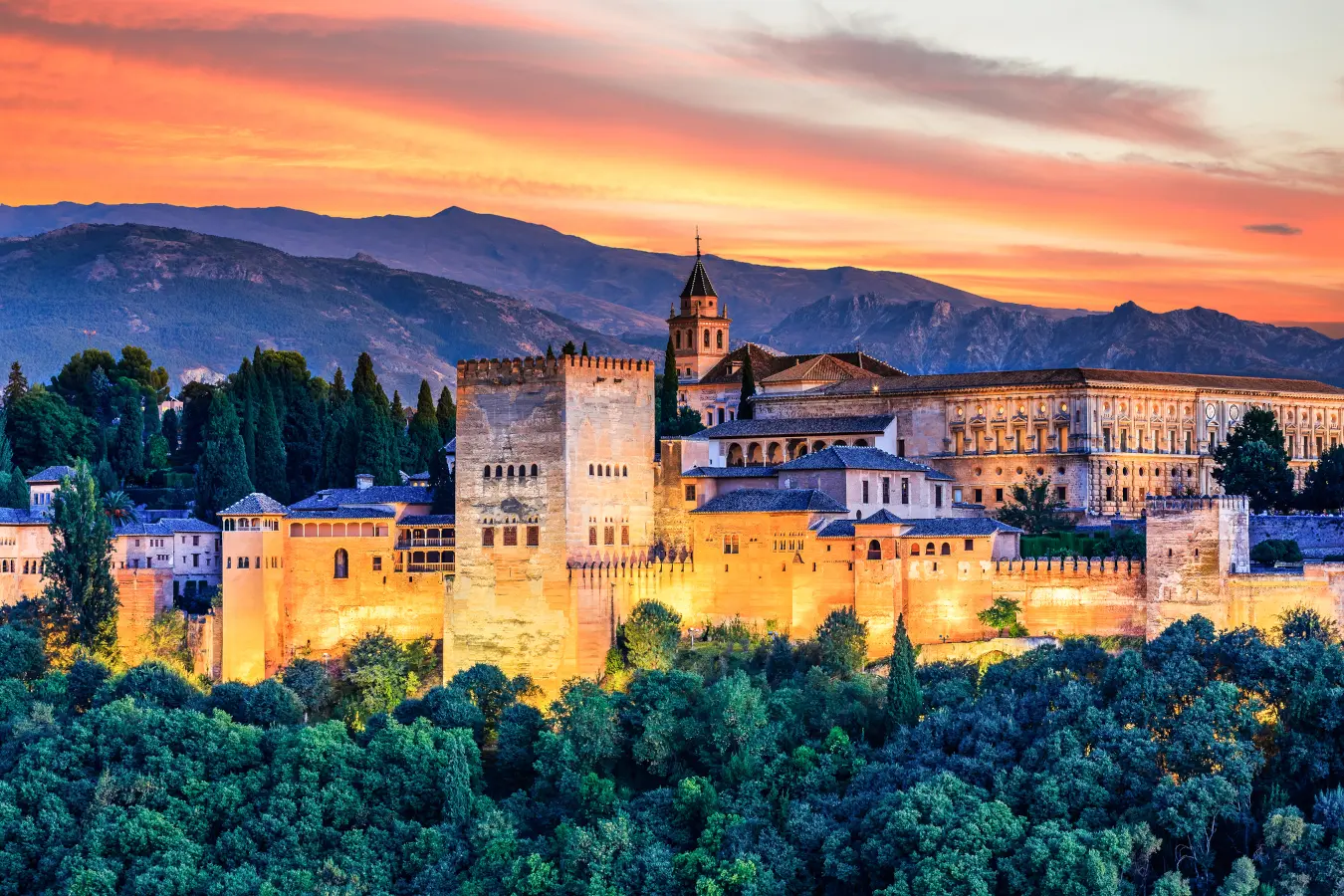
ID 96182900 | Alhambra Granada ©Sorin Colac | Dreamstime.com
15. Which Spanish island group lies in the Atlantic Ocean off the northwestern coast of Africa?
Answer: The Canary Islands.
Round 2: Spanish Food and Drink Trivia Questions
Spain’s regional food is far more varied than a short list of famous dishes suggests. This Spanish food trivia round moves from familiar favorites to soups, cheeses, wine, and island specialties, while this article on what to eat in Spain offers a fuller introduction to the country’s cuisine.
16. Which region of Spain is considered the birthplace of paella?
Answer: Valencia. Traditional paella valenciana is usually made with ingredients such as chicken, rabbit, and local beans rather than seafood.
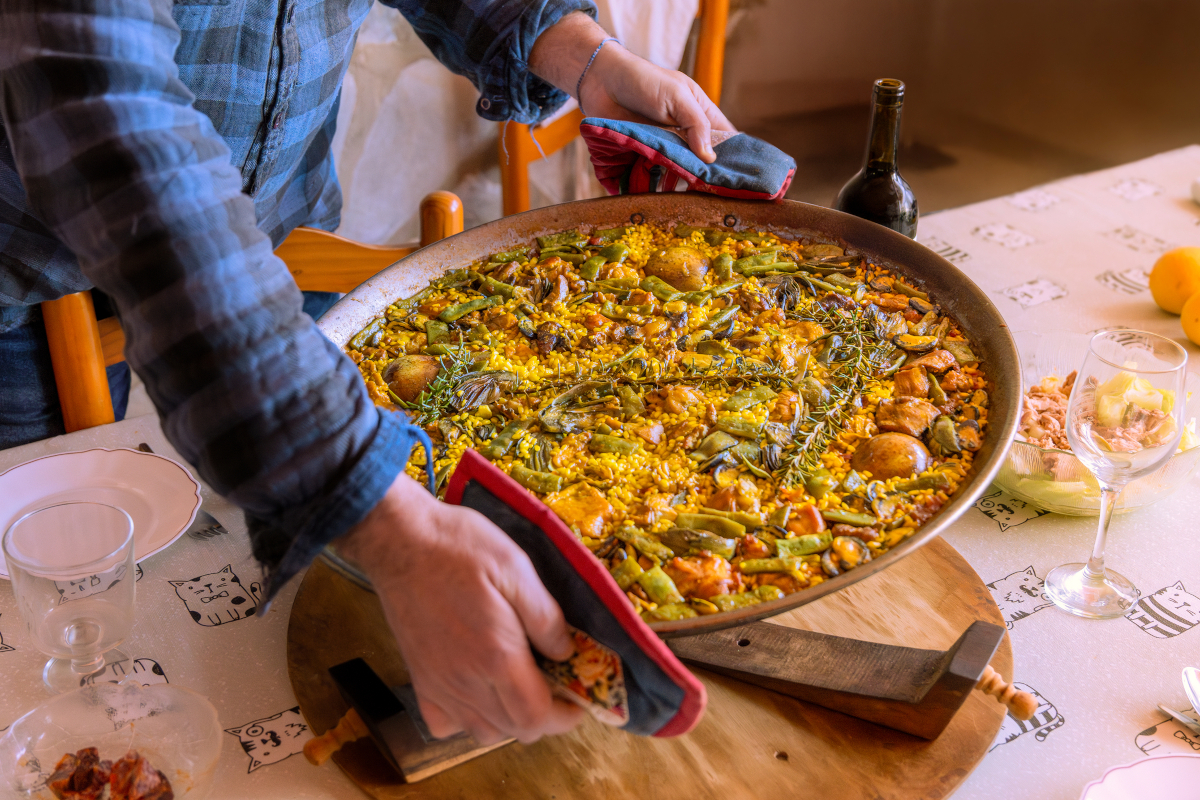
ID 366011804 | Authentic Valencian Paella ©Sirboumanphoto | Dreamstime.com
17. What is the main ingredient in a traditional tortilla española besides eggs?
Answer: Potatoes. Onion is common too, although whether it belongs in the dish inspires strong opinions.
18. What cold Andalusian soup is usually made with tomatoes, peppers, cucumber, olive oil, and bread?
Answer: Gazpacho.
19. What is jamón ibérico?
Answer: Cured ham made from Iberian pigs. The label jamón ibérico de bellota refers to ham from pigs whose finishing diet includes acorns.
20. Which Spanish cheese takes its name from La Mancha?
Answer: Manchego.
21. What are patatas bravas?
Answer: Fried potato pieces commonly served with a boldly flavored bravas sauce.
22. What are pintxos?
Answer: Small bites especially associated with the Basque Country and Navarra, often served on bread and sometimes held together with a skewer.
23. Which fortified Spanish wine is closely associated with Jerez de la Frontera?
Answer: Sherry. Nearby Sanlúcar de Barrameda is especially associated with manzanilla, a dry style of sherry.
24. Which sweet fried-dough treat is often eaten with thick hot chocolate?
Answer: Churros.
25. What is salmorejo?
Answer: A thick cold tomato soup from Córdoba, usually topped with chopped egg and cured ham.
26. Which region gives Rioja wine its name?
Answer: La Rioja, although the Rioja wine region also extends into parts of the Basque Country and Navarra.
27. What is sidra in Spain?
Answer: Cider. Asturias is especially famous for pouring natural cider from above the glass to aerate it.
28. What Spanish sparkling wine is made mainly in Catalonia using the traditional method?
Answer: Cava.
29. What is ajoblanco?
Answer: A cold Andalusian soup made with almonds, garlic, bread, olive oil, and vinegar. Unlike gazpacho, it contains no tomatoes.
30. What are papas arrugadas?
Answer: Small Canary Islands potatoes boiled in heavily salted water until their skins become wrinkled, usually served with mojo sauce.
Round 3: Spanish Cities, Landmarks and Islands
Famous monuments are easier to remember when they’re connected to the city, island, or story around them. This Spain landmarks quiz mixes major sights with several places that receive less attention, and many also appear among the most incredible things to see in Spain.
31. Which Spanish city is home to the Mosque–Cathedral, also known as the Mezquita?
Answer: Córdoba.
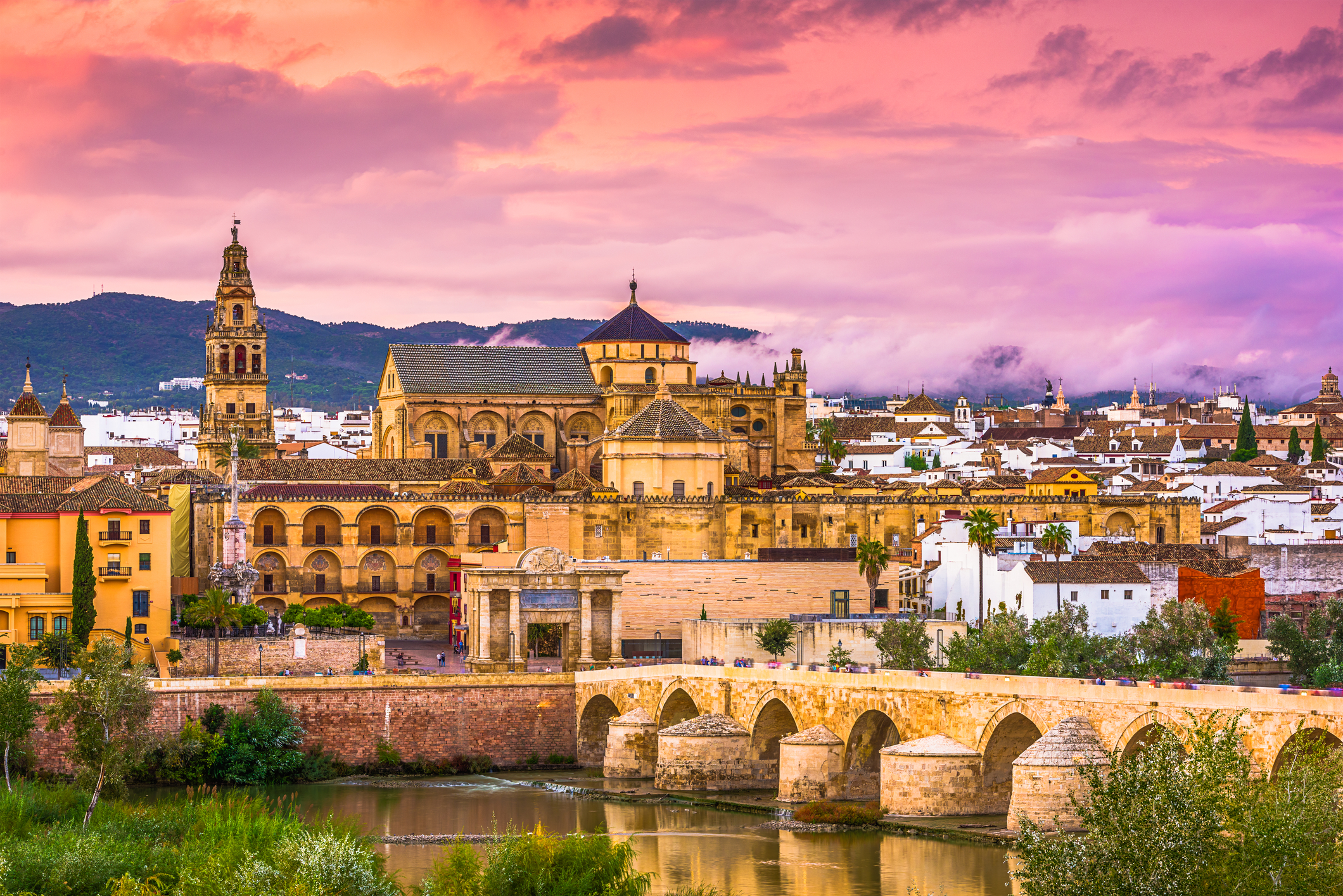
ID 114969698 ©Sean Pavone | Dreamstime.com
32. What is the name of Madrid’s large central park known for its boating lake and Crystal Palace?
Answer: El Retiro.
33. Which Spanish city has a famous Roman aqueduct crossing its historic center?
Answer: Segovia. The monumental granite arches were assembled without mortar.
34. The Guggenheim Museum designed by Frank Gehry is in which northern Spanish city?
Answer: Bilbao.
35. Which city is the traditional destination of the Camino de Santiago pilgrimage routes?
Answer: Santiago de Compostela.
36. On which island would you find the city of Palma?
Answer: Mallorca.
37. Which island is home to Timanfaya National Park?
Answer: Lanzarote.
38. What is the name of Valencia’s futuristic cultural and architectural complex?
Answer: The City of Arts and Sciences. It is one of the city’s signature sights, although there are also many free things to do in Valencia.
39. Which Andalusian city is home to the Real Alcázar and a cathedral with a famous bell tower called La Giralda?
Answer: Seville. Both landmarks are central stops in this Seville travel guide.
40. Which Spanish city is famous for its medieval walls and Romanesque churches?
Answer: Ávila.
41. Which Andalusian city is divided by the deep El Tajo gorge, crossed by the Puente Nuevo?
Answer: Ronda.
42. Which Spanish city is famous for the Casas Colgadas, or Hanging Houses, above the Huécar gorge?
Answer: Cuenca.
43. Which former imperial city is strongly associated with El Greco and the Alcázar overlooking the Tagus?
Answer: Toledo.
44. Which northern city is famous for La Concha beach?
Answer: San Sebastián.
45. Which Madrid restaurant is recognized by Guinness World Records as the oldest restaurant still operating?
Answer: Sobrino de Botín, which opened in 1725 (this is one of the 50 surprising things to know about Spain that I wrote about recently).
Round 4: Famous Spaniards Trivia Questions
A country’s best-known names often provide the quickest way into its culture. This famous Spaniards quiz includes writers, painters, actors, scientists, musicians, and filmmakers, with the focus kept on achievements rather than details that may soon become outdated.
46. Who wrote Don Quixote?
Answer: Miguel de Cervantes.
47. Which Spanish artist painted Guernica?
Answer: Pablo Picasso.
48. Which surrealist artist painted The Persistence of Memory?
Answer: Salvador Dalí. He also designed the flower-shaped Chupa Chups logo.
49. Who became the first Spanish actor to win an Academy Award?
Answer: Javier Bardem, who won Best Supporting Actor for No Country for Old Men.
50. Which Spanish actress played María Elena in Vicky Cristina Barcelona?
Answer: Penélope Cruz.
51. Which filmmaker directed All About My Mother, Talk to Her, and Volver?
Answer: Pedro Almodóvar.
52. Which Spanish painter created Las Meninas?
Answer: Diego Velázquez.
53. Which Spanish artist is known for The Third of May 1808 and the Black Paintings?
Answer: Francisco Goya.
54. Which Spanish singer is known internationally for blending flamenco influences with contemporary pop and experimental sounds?
Answer: Rosalía.
55. Which Spanish neuroscientist shared the 1906 Nobel Prize in Physiology or Medicine?
Answer: Santiago Ramón y Cajal, honored for research on the structure of the nervous system.
56. Which Spanish flamenco guitarist recorded the influential album Almoraima?
Answer: Paco de Lucía.
57. Which architect designed Park Güell and Casa Batlló in Barcelona?
Answer: Antoni Gaudí.
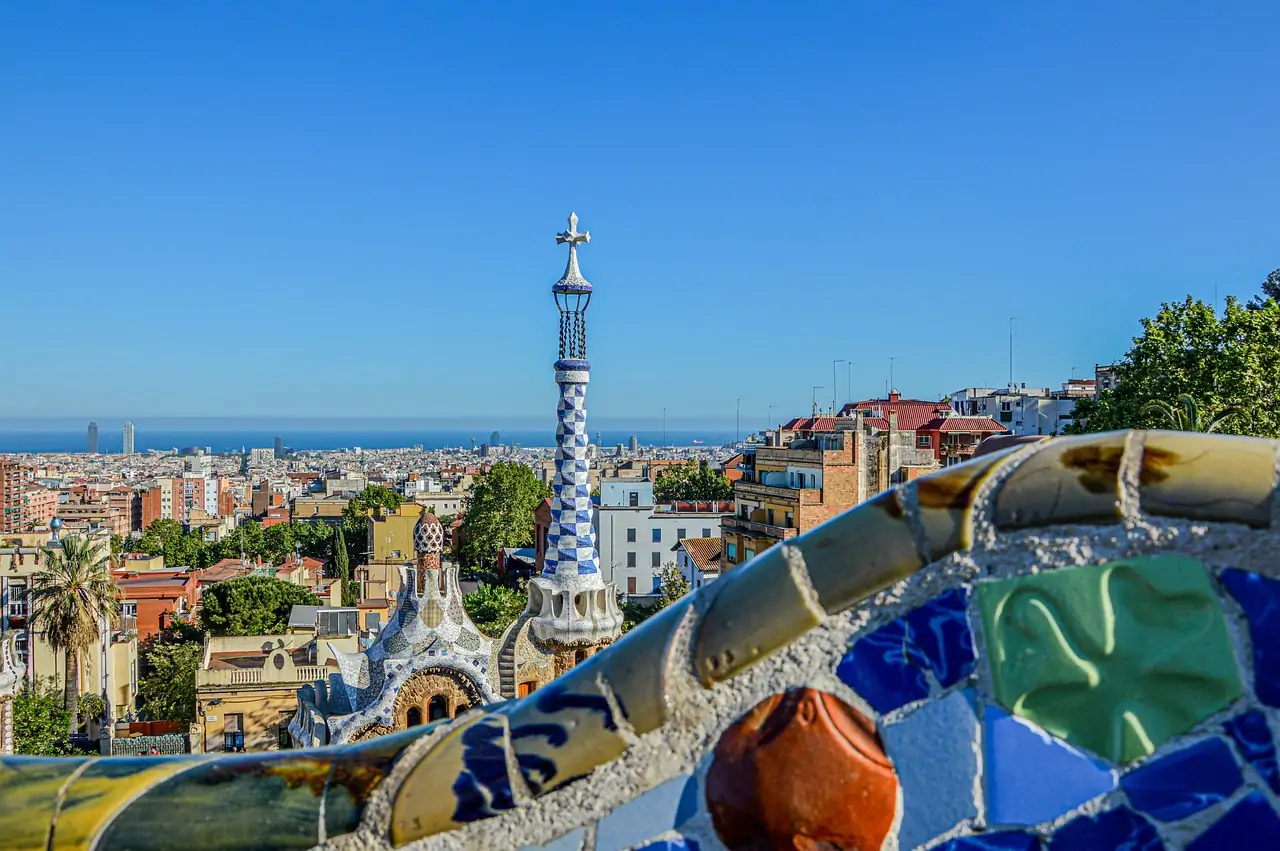 Park Güell
58. Which Spanish writer won the 1989 Nobel Prize in Literature?
Answer: Camilo José Cela.
59. Which Spanish soprano recorded the song Barcelona with Freddie Mercury?
Answer: Montserrat Caballé.
60. Which Madrid-born painter was a major figure in Cubism alongside Picasso and Georges Braque?
Answer: Juan Gris.
Round 5: Spanish Festivals, Traditions and Everyday Customs
Spain’s celebrations change considerably from one region and season to another. These Spanish culture quiz questions include famous festivals, family customs, superstitions, and traditions that can feel completely new to readers outside the country; the language behind everyday life also appears in these Spanish proverbs.
61. What do many people in Spain eat with each midnight clock chime on New Year’s Eve?
Answer: Twelve grapes, one for each chime and each month of the coming year. You can discover more fascinating New Year’s Traditions Around the World here.
62. On which date is Three Kings’ Day celebrated?
Answer: January 6.
63. Which Valencia festival ends with huge artistic monuments being burned?
Answer: Las Fallas.
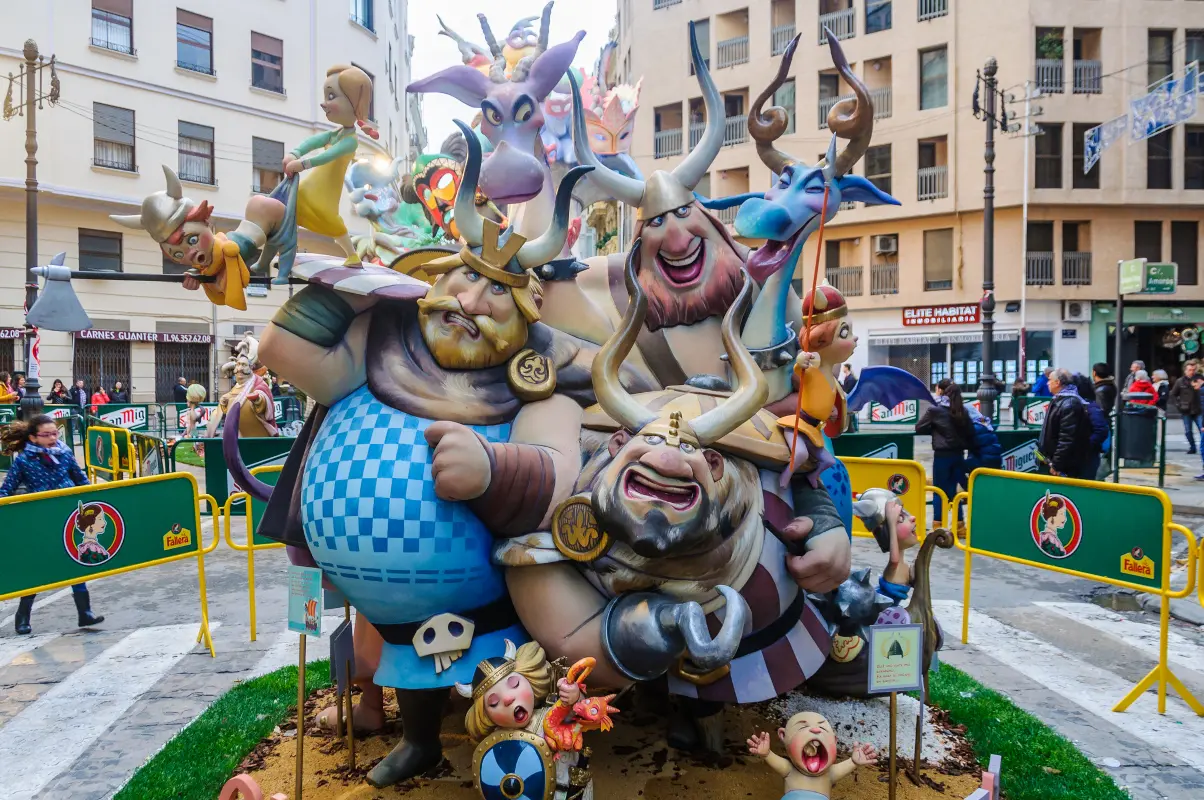
ID 77558899 ©Gábor Kovács | Dreamstime.com
64. In which city does the famous running of the bulls take place during the San Fermín festival?
Answer: Pamplona.
65. What is Semana Santa?
Answer: Holy Week, marked in many Spanish cities by religious processions and long-established local traditions.
66. Which Seville celebration is known for decorated casetas, flamenco-style dresses, dancing, and horses?
Answer: The Feria de Abril, or April Fair.
67. What are castells?
Answer: Human towers traditionally built by organized teams in Catalonia.
68. Who is Ratoncito Pérez?
Answer: A small mouse who collects children’s lost teeth in a tradition similar to the Tooth Fairy.
69. Which Canary Island city hosts one of Spain’s best-known Carnival celebrations?
Answer: Santa Cruz de Tenerife.
70. What unusual figure appears in many traditional Catalan nativity scenes?
Answer: The caganer, a small squatting figure usually hidden among the other characters.
71. Which city hosts the major Fiesta del Pilar in October?
Answer: Zaragoza.
72. What is Spain’s traditional day for playing pranks, similar to April Fools’ Day?
Answer: Día de los Santos Inocentes on December 28.
73. What nickname is given to the first prize in Spain’s famous Christmas Lottery?
Answer: El Gordo, meaning “the big one” or “the fat one.” The name technically refers to the top prize, not the entire lottery.
74. Which Andalusian city opens many flower-filled private courtyards during a famous festival in May?
Answer: Córdoba, during the Festival of the Patios.
75. Which date is traditionally considered unlucky in Spain: Friday the 13th or Tuesday the 13th?
Answer: Tuesday the 13th.
Round 6: Spain Geography, Nature and Wildlife Trivia
Maps of Spain become more interesting once the mainland, islands, African territories, rivers, mountains, and protected landscapes are considered together. These Spain geography trivia questions use precise wording, and the wider geography trivia challenge offers another round after this one.
76. What mountain range forms much of the natural border between Spain and France?
Answer: The Pyrenees.
77. What is the highest point in Spain?
Answer: Mount Teide on Tenerife. Mulhacén is the highest mountain on mainland Spain.
78. Which river flows through Madrid and later joins the Tagus?
Answer: The Manzanares.
79. Which major river reaches the Atlantic Ocean at Lisbon after flowing through Spain and Portugal?
Answer: The Tagus, known as the Tajo in Spanish.
80. Which river forms a large delta on Spain’s Mediterranean coast?
Answer: The Ebro.
81. Which body of water lies north of much of Spain’s northern coast?
Answer: The Bay of Biscay.
82. What narrow waterway separates southern Spain from Morocco?
Answer: The Strait of Gibraltar.
83. Which two Spanish autonomous cities are located on the North African coast?
Answer: Ceuta and Melilla.
84. What semi-arid area in Almería is famous for landscapes used in many Western films?
Answer: The Tabernas Desert.
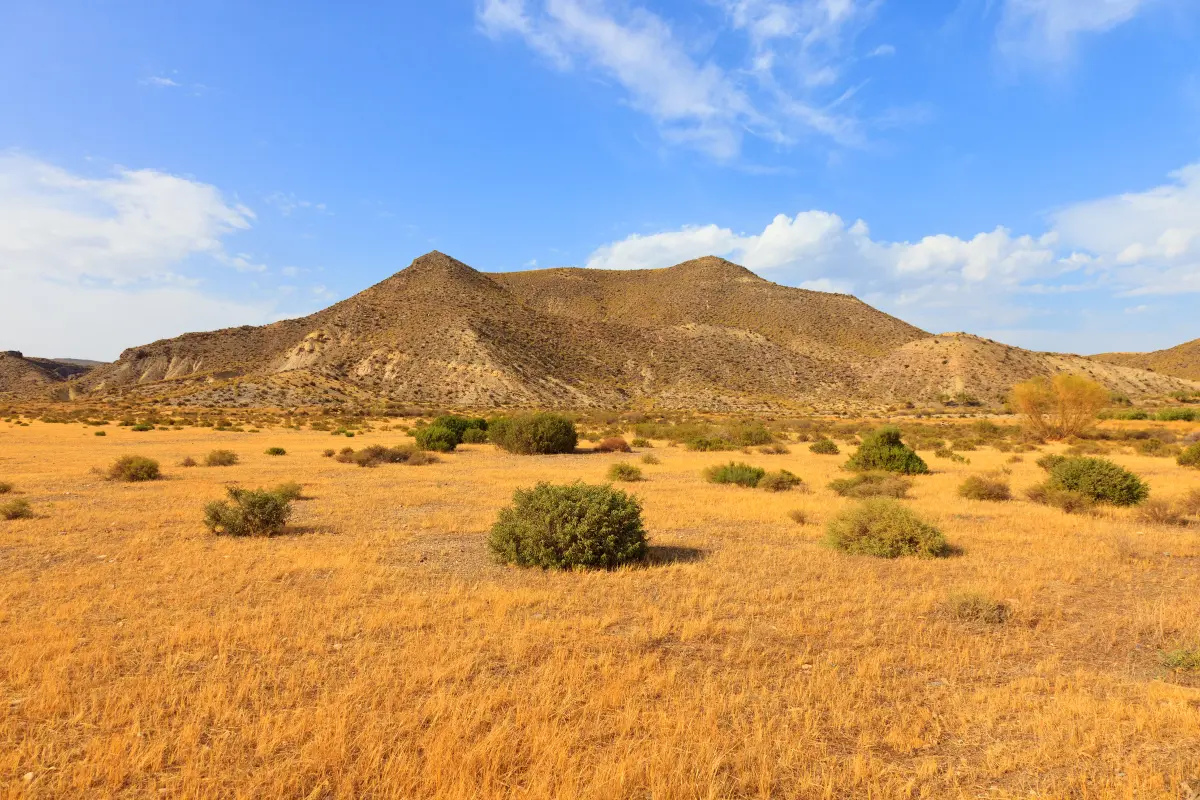
ID 23983008 ©Stevanzz | Dreamstime.com
85. Which endangered wild cat native to the Iberian Peninsula has been the focus of major conservation work?
Answer: The Iberian lynx.
86. Which protected wetland in Andalusia is famous for migratory birds and diverse habitats?
Answer: Doñana National Park.
87. Which major river flows through Seville before reaching the Atlantic Ocean?
Answer: The Guadalquivir.
88. What striking semi-desert landscape of eroded clay formations lies in Navarra?
Answer: Bardenas Reales.
89. Which mountain range and national park extends across Asturias, Cantabria, and Castilla y León?
Answer: The Picos de Europa.
90. Which national park on La Palma takes its name from a vast volcanic depression?
Answer: Caldera de Taburiente National Park.
Round 7: Spanish Art, Literature, Music, Film and Television
Works of art and entertainment create a different kind of memory test than names and dates. This Spanish art trivia round combines painting, books, music, film, and television, while the famous landmark quiz offers a more visual travel challenge.
91. In which Catalan town can visitors find the Dalí Theatre-Museum?
Answer: Figueres.
92. Which artist painted The Garden of Earthly Delights, now displayed in Madrid’s Prado Museum?
Answer: Hieronymus Bosch. He was Netherlandish rather than Spanish.
93. Which anonymous 16th-century Spanish novel follows a poor boy who survives by serving a series of masters?
Answer: Lazarillo de Tormes.
94. Which poet and playwright wrote Blood Wedding and The House of Bernarda Alba?
Answer: Federico García Lorca.
95. Which Spanish stage genre combines spoken dialogue, songs, and orchestral music?
Answer: Zarzuela.
96. What is the original Spanish title of the television series Money Heist?
Answer: La Casa de Papel.
97. Which dark fantasy film set in post-Civil War Spain follows a girl named Ofelia?
Answer: Pan’s Labyrinth.
98. Which Catalan artist created The Farm and Harlequin’s Carnival?
Answer: Joan Miró.
99. Which musical instrument commonly accompanies flamenco singing and dancing?
Answer: The guitar.
100. What is the name of rhythmic hand-clapping used in flamenco?
Answer: Palmas.
101. Which Spanish author wrote The Shadow of the Wind?
Answer: Carlos Ruiz Zafón.
102. Which Spanish filmmaker made the surrealist short film Un Chien Andalou with Salvador Dalí?
Answer: Luis Buñuel.
103. Which Valencian painter became known for luminous beach scenes and sunlit landscapes?
Answer: Joaquín Sorolla.
104. What does the flamenco term cante jondo refer to?
Answer: A deeply expressive style of flamenco singing; the phrase literally means “deep song.”
105. Which Spanish composer wrote Concierto de Aranjuez?
Answer: Joaquín Rodrigo.
Round 8: Spain History and Royalty Trivia Questions
Spain’s past includes Roman provinces, medieval kingdoms, overseas expansion, civil war, dictatorship, and democratic change. These Spain history trivia questions stay specific enough to avoid turning complex events into vague one-line claims, and the timeline continues in these European history trivia questions.
106. What name did the Romans use for the Iberian Peninsula and their provinces there?
Answer: Hispania.
107. What term is commonly used for the Muslim-ruled territories of medieval Iberia?
Answer: Al-Andalus.
108. Which two monarchs are known in English as Ferdinand and Isabella?
Answer: Ferdinand II of Aragon and Isabella I of Castile.
109. What major event took place in Granada in 1492?
Answer: The Nasrid kingdom surrendered to the Catholic Monarchs, ending Muslim political rule in Granada.
110. Which explorer sailed west under the sponsorship of Ferdinand and Isabella in 1492?
Answer: Christopher Columbus.
111. What 1494 treaty divided newly claimed overseas lands between Spain and Portugal?
Answer: The Treaty of Tordesillas.
112. Which Spanish king was also Holy Roman Emperor Charles V?
Answer: Charles I of Spain.
113. Which English monarch was the target of the Spanish Armada campaign of 1588?
Answer: Elizabeth I.
114. In which years was the Spanish Civil War fought?
Answer: From 1936 to 1939.
115. Who ruled Spain as a dictator from the end of the Civil War until 1975?
Answer: Francisco Franco.
116. Which king played a central role in Spain’s transition to democracy after Franco’s death?
Answer: King Juan Carlos I.
117. In what year was Spain’s current democratic Constitution approved by referendum?
Answer: 1978.
118. In which city was Spain’s liberal Constitution of 1812 promulgated?
Answer: Cádiz. The constitution became popularly known as La Pepa.
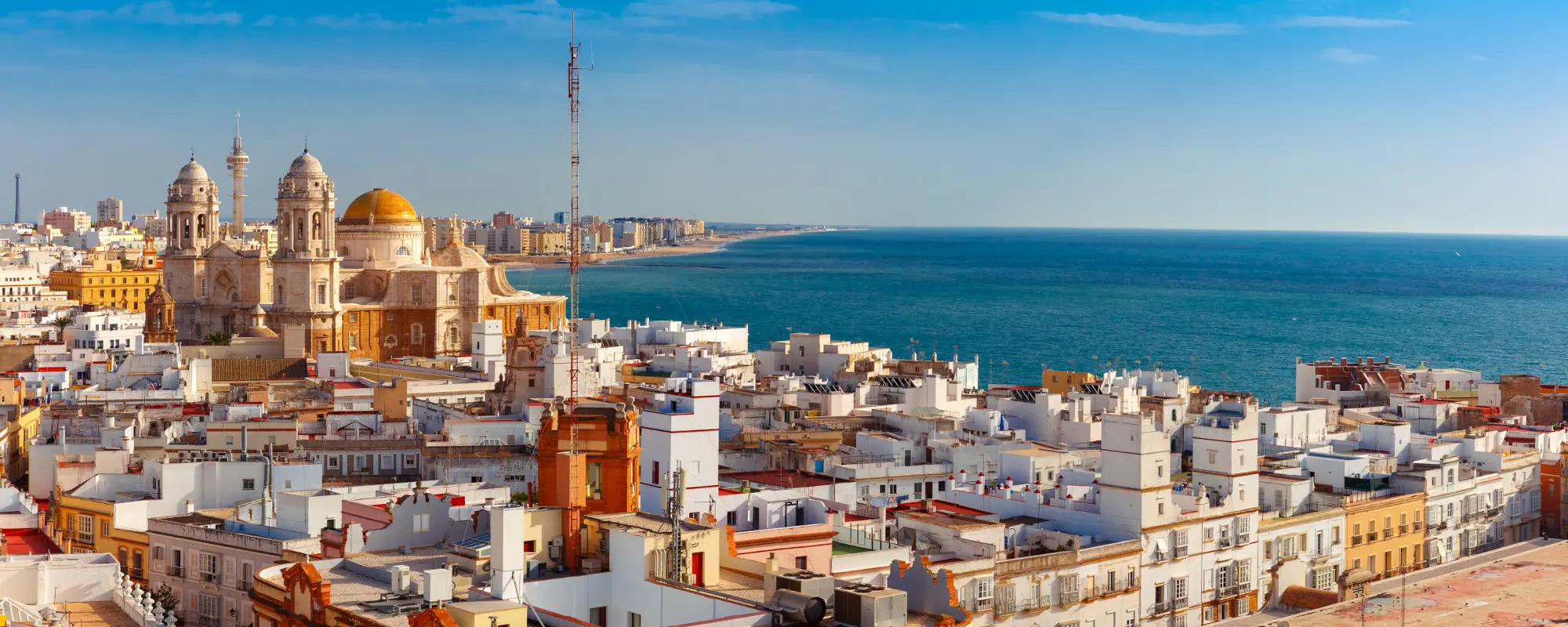
ID 94674620 | Cadiz ©Olgacov | Dreamstime.com
119. Which series of treaties beginning in 1713 helped end the War of the Spanish Succession?
Answer: The Treaties of Utrecht.
120. What was the name of the caliphate centered in Córdoba during the 10th century?
Answer: The Caliphate of Córdoba.
Round 9: Spain Sports Trivia Questions
Football naturally takes several places in this round, although Spain’s sporting history reaches into tennis, cycling, golf, basketball, badminton, and motorsport too. These Spain sports trivia questions focus on lasting achievements, and football fans can continue with the FIFA World Cup trivia quiz.
121. Which Spanish footballer won the women’s Ballon d’Or in both 2021 and 2022?
Answer: Alexia Putellas.
122. Who scored Spain’s winning goal in the 2010 World Cup final?
Answer: Andrés Iniesta.
123. What is El Clásico?
Answer: The famous football rivalry between Real Madrid and FC Barcelona.
124. What is the name of Spain’s top men’s football league?
Answer: La Liga.
125. Which Spanish football club is famous for traditionally fielding players developed in or connected to the Basque Country?
Answer: Athletic Club.
126. Which Grand Slam tennis tournament did Rafael Nadal win a record 14 times in men’s singles?
Answer: The French Open.
127. What is Spain’s major annual road cycling race called?
Answer: The Vuelta a España.
128. Which Spanish golfer won the Masters Tournament twice, in 1980 and 1983?
Answer: Seve Ballesteros.
129. Which Spanish Formula One driver won the world championship in 2005 and 2006?
Answer: Fernando Alonso.
130. Which Spanish motorcycle racer won MotoGP world championships in 2010, 2012, and 2015?
Answer: Jorge Lorenzo.
131. Which city hosted the 1992 Summer Olympics?
Answer: Barcelona.
132. Which Spanish basketball brothers both played in the NBA and won major international medals with Spain?
Answer: Pau and Marc Gasol.
133. Which Spanish cyclist won the Tour de France five consecutive times from 1991 to 1995?
Answer: Miguel Induráin.
134. Which Spanish badminton player won the women’s singles Olympic gold medal in 2016?
Answer: Carolina Marín.
Round 10: Spain in Everyday Life – Brands, Words and Surprising Connections
Products, words, transport, and household objects create an accessible break after the denser history round. This part of the Spain general knowledge quiz looks at connections many people have encountered without realizing they were Spanish.
135. Which global fashion retailer was founded in Galicia and opened its first store in A Coruña?
Answer: Zara.
136. Which Spanish fashion brand founded in Barcelona shares its name with a tropical fruit?
Answer: Mango.
137. Which Spanish car manufacturer has its headquarters in Martorell, near Barcelona?
Answer: SEAT.
138. Which footwear brand founded in Mallorca has a name meaning “peasant” in Catalan?
Answer: Camper.
139. Which Spanish department-store chain has a name that means “The English Cut”?
Answer: El Corte Inglés.
140. Which Spanish word for a small courtyard has become common in English?
Answer: Patio.
141. Which company operates much of Spain’s national passenger rail service?
Answer: Renfe.
142. Which Spanish word for an afternoon rest is also used in English?
Answer: Siesta.
143. What household-cleaning invention is strongly associated with Spanish engineer Manuel Jalón?
Answer: The modern mop-and-wringer system.
144. Which sweet bar traditionally made with honey and almonds is especially popular in Spain at Christmas?
Answer: Turrón.
145. What Spanish word describes the conversation and time spent at the table after a meal?
Answer: Sobremesa. This unhurried time together is one of the habits often associated with life in Spain.
146. What does the name AVE stand for on Spain’s high-speed rail network?
Answer: Alta Velocidad Española, meaning Spanish High Speed.
147. Which Spanish porcelain company was founded near Valencia in the 1950s?
Answer: Lladró.
Round 11: Spain True or False – Surprising Facts and Common Misconceptions
A claim can sound convincing while hiding one inaccurate word. This Spain true-or-false quiz uses clear statements rather than unfair tricks, and the explanations also connect with practical things to know before visiting Spain.
148. True or false: Spain is the second-largest country in the European Union by area.
Answer: True. France is the largest.
149. True or false: The Sagrada Família is Barcelona’s cathedral.
Answer: False. It is a basilica; Barcelona Cathedral is the Cathedral of the Holy Cross and Saint Eulalia.
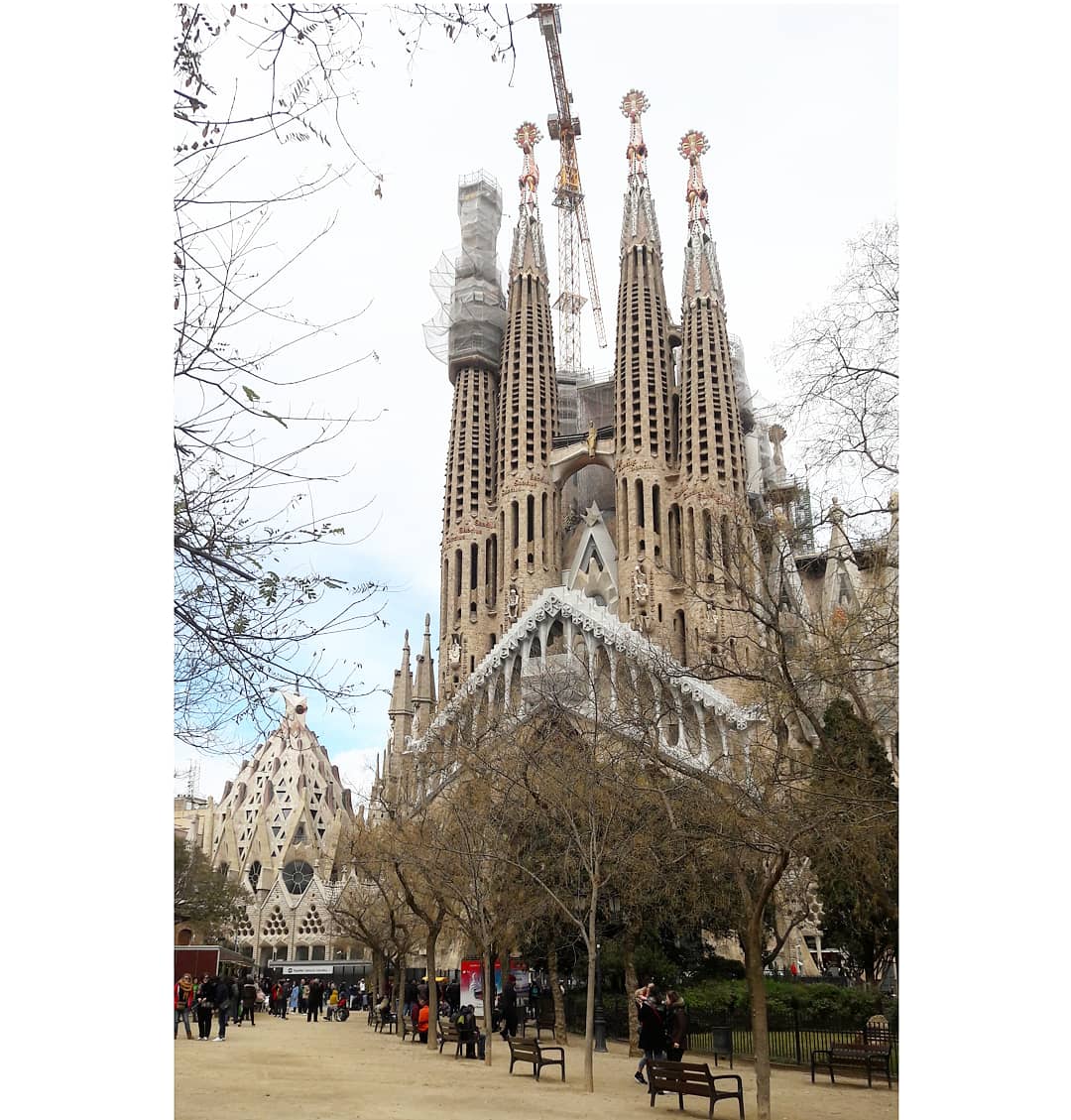
150. True or false: Spain’s national anthem has official lyrics.
Answer: False. La Marcha Real has no official lyrics.
151. True or false: The Canary Islands were named after canary birds.
Answer: False. The islands’ name is generally linked to the Latin Canariae Insulae, often interpreted as “Islands of Dogs”; the birds were named after the islands.
152. True or false: Spanish is the only language with official status anywhere in Spain.
Answer: False. Spanish is the official language of the state, while other languages are co-official in particular autonomous communities.
153. True or false: Gibraltar is part of Spain.
Answer: False. It is a British Overseas Territory, although Spain maintains a sovereignty claim.
154. True or false: El Greco was born in Spain.
Answer: False. He was born on Crete but spent much of his career in Spain, especially Toledo.
155. True or false: Mainland Spain and the Canary Islands use the same standard time.
Answer: False. The Canary Islands are one hour behind mainland Spain.
156. True or false: Mortar holds together the monumental Roman arches of the Aqueduct of Segovia.
Answer: False. The granite blocks were fitted together without mortar.
157. True or false: Spain shares a land border with Andorra.
Answer: True. The border lies in the Pyrenees.
158. True or false: The Prado Museum mainly focuses on modern and contemporary art.
Answer: False. The Prado is best known for European art from the 12th to the early 20th century; Madrid’s Reina Sofía focuses on modern and contemporary art.
159. True or false: The coat of arms on Spain’s flag includes the Pillars of Hercules.
Answer: True. The two columns flank the shield and carry the motto Plus Ultra.
160. True or false: Don Quixote was first published as a single complete volume.
Answer: False. Its two parts were first published in 1605 and 1615.
Round 12: Hard Spain Trivia Questions for Experts
The final section is for readers who still have a strong score after 160 questions. These hard Spain trivia questions use lesser-known places, languages, monuments, and border curiosities, although every answer can still be understood without specialist knowledge.
161. What small island in the Bidasoa River alternates between Spanish and French administration every six months?
Answer: Pheasant Island, or Isla de los Faisanes.
162. Which language spoken in northern Spain is generally classified as a language isolate?
Answer: Basque, also called Euskara.
163. What architectural style combines Islamic artistic traditions with Christian-era building projects in medieval Spain?
Answer: Mudéjar.
164. Which ancient Roman city in present-day Extremadura was founded as Augusta Emerita?
Answer: Mérida.
165. Which Spanish city is home to the country’s oldest university that is still operating, founded in 1218?
Answer: Salamanca.
166. What is the name of the medieval palace-fortress in Zaragoza built by the Banu Hud dynasty?
Answer: The Aljafería.
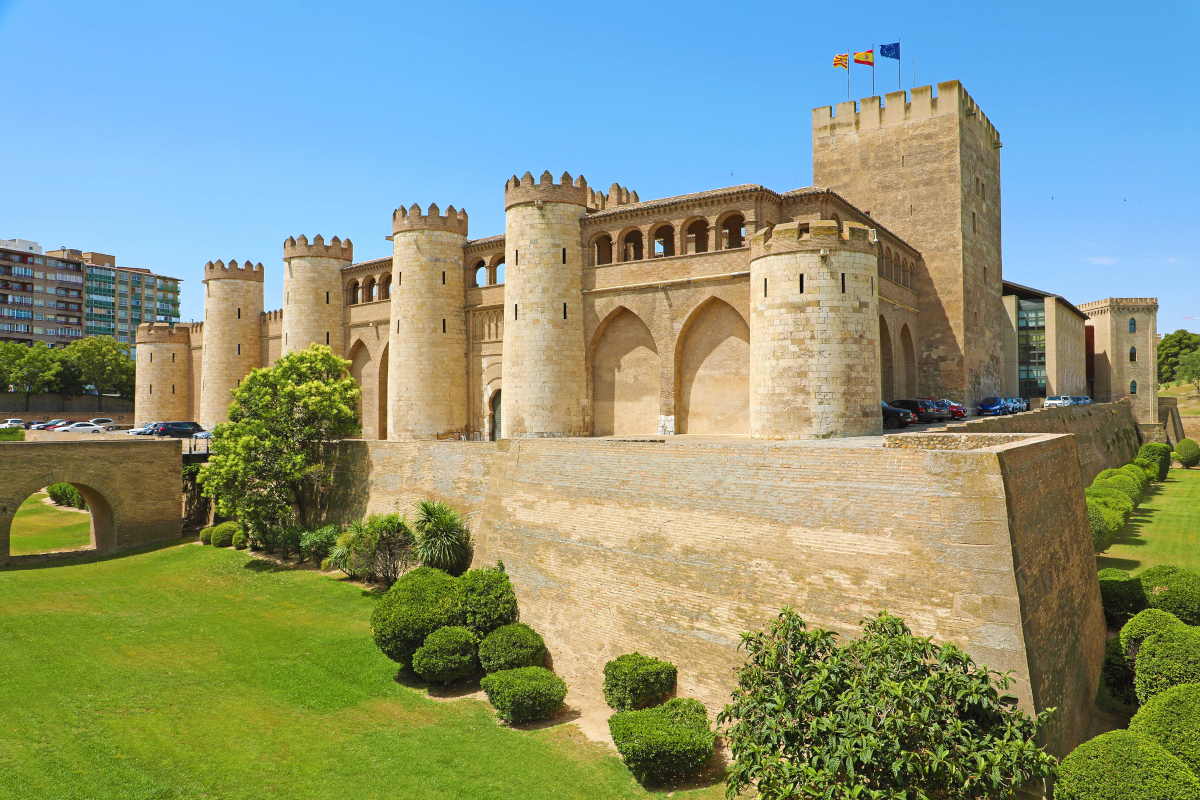
ID 153369029 | Aljaferia ©Sergiomonti | Dreamstime.com
167. Which lighthouse in A Coruña is the world’s oldest known functioning Roman lighthouse?
Answer: The Tower of Hercules.
168. What is the name of the prehistoric cave in Cantabria famous for Paleolithic paintings?
Answer: Altamira.
169. Which king ordered the construction of the monastery and royal complex at El Escorial?
Answer: Philip II.
170. What whistled language of La Gomera can carry messages across the island’s deep ravines?
Answer: Silbo Gomero. It reproduces spoken Spanish through whistles and is taught in schools on the island.
171. Which cathedral on the Camino de Santiago keeps a live rooster and hen in a special coop?
Answer: The Cathedral of Santo Domingo de la Calzada, recalling a medieval miracle legend.
172. What point in Madrid’s Puerta del Sol marks the starting point of Spain’s radial roads?
Answer: Kilometre Zero, or Kilómetro Cero.
173. What Spanish town forms an exclave completely surrounded by French territory?
Answer: Llívia.
174. What unusual ride carries travelers from Sanlúcar de Guadiana in Spain to Alcoutim in Portugal?
Answer: A cross-border zipline. Because Portugal is one hour behind mainland Spain, riders also appear to travel back in time.
175. Which island contains Garajonay National Park, known for its ancient laurel forest?
Answer: La Gomera.
How Well Do You Know Spain?
0–45 correct: You’re at the beginning of your Spain discovery.
46–85 correct: You know many of the essentials and picked up several less familiar answers.
86–125 correct: That’s a strong result, especially if you answered without searching.
126–155 correct: You know Spain far beyond its most famous cities, foods, and festivals.
156–175 correct: Exceptional. Very few casual quiz players will reach this range.
What was your score, and which answer surprised you most? I’d also like to know where the quiz became noticeably harder for you.
Conclusion
Spain holds far more than the places and traditions most of us recognize immediately. Reaching question 175 means moving through details that are easy to remember, facts that need a moment of thought, and a few answers that may stay with you long after the quiz ends.
Continue with these general knowledge questions and answers or take the Europe travel trivia quiz for a wider mix of destinations. You can also explore the best cities to visit in Spain, follow an insider’s guide to Málaga, plan three days on the Costa del Sol, or use this Costa del Sol travel guide for more ideas. Readers who prefer wordplay can switch to these travel riddles with answers.
Frequently Asked Questions About Spain Trivia
Is this quiz about Spain or all Spanish-speaking countries?
This quiz is about Spain. It doesn’t cover the history, geography, food, or traditions of every country where Spanish is spoken.
Are these Spain trivia questions suitable for children?
The opening questions are suitable for many children and beginners. Later sections become more difficult, especially the history and expert rounds, so families can choose the questions that fit the ages and interests of the players.
Can these questions be used for a classroom or family quiz?
Yes, you can use them for a personal classroom activity, family game, informal quiz night, or travel-themed gathering. The answers appear directly under the questions, which also makes the article easy to use when you’re playing alone.
How were the Spain trivia answers checked?
The answers were verified using official Spanish institutions, UNESCO, museums, recognized cultural organizations, sports records, and established historical and geographic references. Questions based on temporary officeholders, current league tables, sponsors, and other fast-changing details were intentionally avoided.
Photo source: Pixabay
More amazing articles for you:

Violeta-Loredana Pascal is a communications expert, business mentor, and the founder of Earth’s Attractions and PRwave INTERNATIONAL. A pioneer in the Romanian digital PR landscape since 2005, she holds a degree in Communication and Social Sciences from SNSPA Bucharest. Violeta is a senior trainer at AcademiadeAfaceri.ro, where she leverages over 20 years of experience to teach professional courses in PR strategy and workplace productivity. By blending high-level business consulting with a passion for holistic travel and wellness, she empowers solopreneurs to overcome procrastination, build profitable brands, and design a life of purposeful adventure.