Barcelona Beyond the Tourist Trail: An Editorial Guide to Immersive Slow Travel – Driftwood Journals
There is a distinct moment when the predictable tourist version of Barcelona fades away, revealing the authentic rhythm of the city. It happens when you step away from the chaotic crowds of Las Ramblas and turn into the quiet, sun-dappled limestone alleys of El Born or El Raval. It is the sensory hum of a neighborhood waking up: the sharp aroma of espresso cutting through the morning air, the rhythmic clatter of metal shop shutters rolling open, and the soft murmur of Catalan conversations echoing across quiet squares.
For the independent, design-minded traveller, Barcelona shouldn’t be experienced as a frantic race between crowded landmarks. The city rewards a philosophy of slow travel in Spain. This approach prioritizes depth over speed, encouraging you to trade standard itineraries for long afternoons capturing the golden Mediterranean light shifting across historic facades.
But to experience the city like a local, you have to prepare like one. Balancing your creative visual pursuits with practical, localized logistics ensures your Mediterranean city break remains completely untethered from typical tourist frustrations.
The Sensory Soul of the City: Where Locals Eat and Wander
True Bajan or Catalan authenticity is found by tracking where neighborhood residents spend their afternoons. Finding where locals eat Barcelona style requires shifting your daily schedule to match the regional rhythm. Locals rarely sit down for dinner before 9:00 PM or 10:00 PM.
The Art of the Menú del Día
If you are exploring during the day, look for the traditional menú del día Spain offers nationwide. Originally introduced as a budget-friendly lunch option for workers, this three-course fixed midday meal is a gastronomic institution.
Step inside a wood-panelled bodega in the Gràcia neighborhood around 2:00 PM. For a flat fee—usually between €12 and €18—you will be served a stellar home-cooked starter like espinacs amb panses (spinach with raisins and pine nuts), a main of grilled sea bass or pork cheek, fresh bread, and a small earthenware jug of house wine.
| TYPICAL NEIGHBORHOOD MAP | ||
| BARCELONETA | EL POBLENOU | GRÀCIA |
| • Historic seafood
• Old fisherman houses • Midday tapas spots |
• Old industrial
• Modern art studios • Craft breweries |
• Bohemian arts
• Tree-lined squares • Local bodegas |
Capturing the Light
For those focused on travel photography Barcelona offers endless architectural texture. While the monumental curves of Gaudí’s masterpieces are spectacular, the finest frames are often found in the industrial-turned-artistic barrio of El Poblenou.
Here, old textile factories sit alongside contemporary galleries, offering striking structural juxtapositions. Wake up at dawn to catch the soft light hitting the brickwork before the neighborhood stirs.
Navigating Traditional Spanish Markets: The Cash and Card Reality
No Barcelona city break guide is complete without exploring the city’s covered food markets. While the famous Mercat de la Boqueria on the main strip features stunning displays, it has largely transformed into a crowded photo opportunity filled with overpriced fruit cups.
Genuine Market Alternatives
To experience a working neighborhood hub, take a morning walk to the Mercat de Santa Caterina or the historic Mercat de Sant Antoni. These Spanish markets travel tips focus heavily on observation: watch elderly residents debate the quality of jamón ibérico with third-generation butchers, or select fresh seafood straight from the delta.
The Financial Logistics of Slow Travel
While Spain has rapidly adopted digital payments, local markets and traditional bodegas run on a hybrid system. If you try to pay for a €1.50 cortado coffee or a single slice of manchego cheese with an international credit card, you will face frustrated glances. Carrying physical banknotes is a necessity for these small interactions.
However, executing your Spain travel money tips properly means avoiding structural traps early on. You must avoid airport currency exchange euros counters at all costs. These transit terminals operate without local competition, allowing them to impose awful conversion markups that can instantly drain 10% of your travel funds before you even reach the taxi rank.
To align with an independent, self-contained travel ethos, the smartest strategy is to manage your currency requirements online well before your flight details are printed.
Whenever I am preparing a checklist for a Spanish getaway—or even mapping out an off-the-beaten-track route for an Asturias travel guide trip up north—I make it a rule to buy euros before you fly.
Rather than settling for poor high-street bank exchange rates or dealing with limited local stock, I buy euros online UK delivery from the specialist platform Travel FX.
Because they run a streamlined digital brokering system without the heavy overheads of high-street storefronts, they pass those structural savings directly to your wallet. They offer bank-beating exchange rates that update in real-time alongside the global market.
Your physical euros are packaged securely and shipped directly to your house via fully insured Royal Mail Special Delivery, ensuring you land in Catalonia with crisp banknotes ready for your first market exchange.
Discovering Barcelona Beyond the Tourist Trail
To completely break away from standard itineraries, spend an afternoon exploring the best neighbourhoods Barcelona keeps tucked away from the coastal strip.
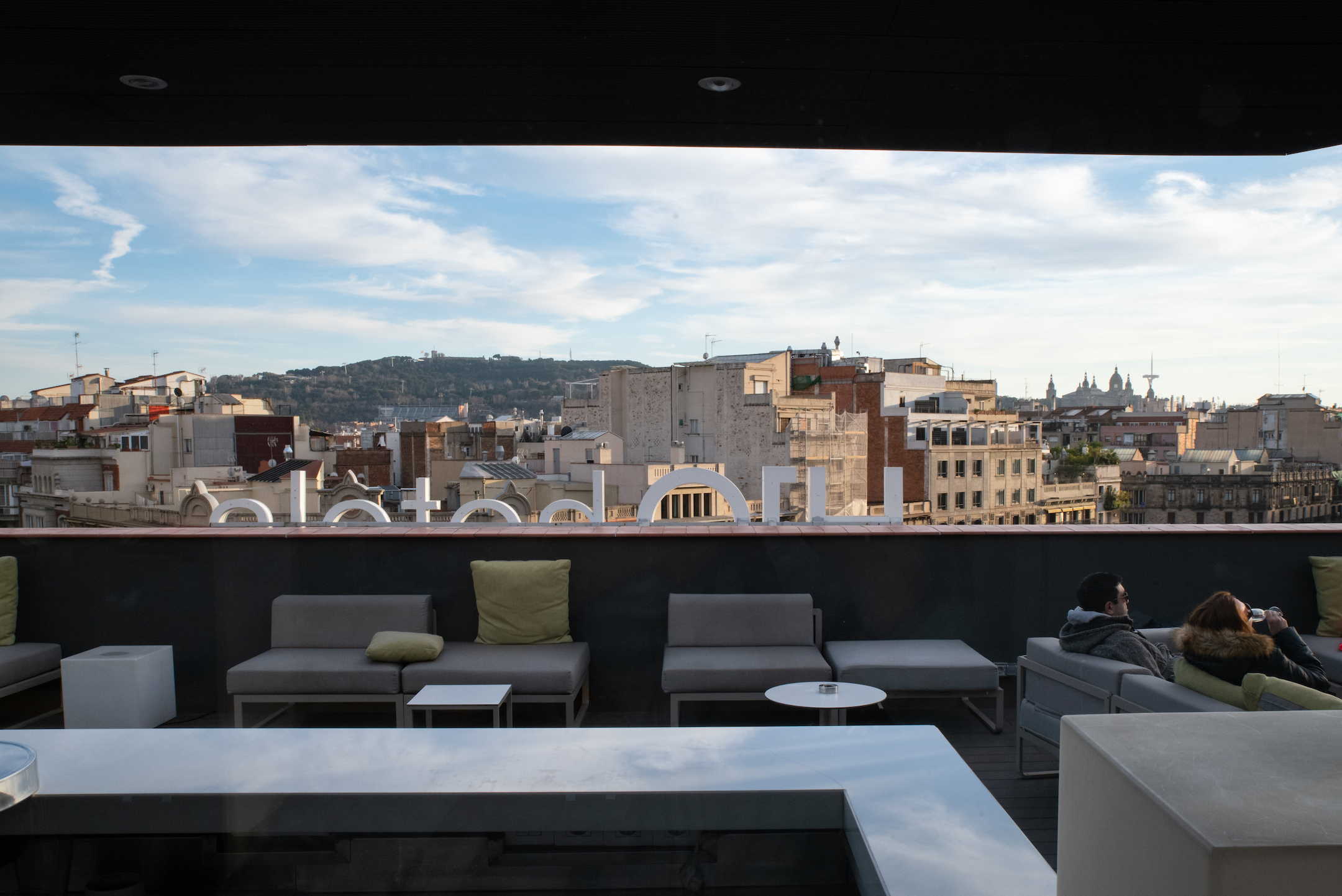
Cross the grand avenue of Diagonal and climb into Horta-Guinardó. Here, you will find the Carmel Bunkers—old anti-aircraft defenses from the Spanish Civil War that offer an unparalleled, 360-degree panoramic view of the entire urban grid stretching down to the sea.
Bring a notebook or your camera gear just before dusk. As the streetlights slowly illuminate the grid structure of the Eixample district below, you’ll experience a quiet, atmospheric view of the city that feels entirely disconnected from the tourist masses.
Frequently Asked Questions
What is the most common mistake UK travellers make with credit cards in Spain?
When utilizing a UK debit or credit card at an overseas terminal, the machine will often ask if you prefer to be billed in British Pounds (GBP) or Euros (EUR). Always select Euros; choosing pounds triggers a costly mechanism called Dynamic Currency Conversion (DCC), adding a hidden house exchange fee to your transaction.
How much physical cash should I keep on hand for a slow travel Spain trip?
For a standard weekend city break, keeping roughly €40 to €60 in small-denomination physical banknotes handy is ideal. This comfortably covers daily incidentals like neighborhood bus trips, local tips, market snacks, and coffees at traditional bodegas that reject international cards for small amounts.
Is independent travel Spain wide safe for carrying photographic equipment?
Yes, Barcelona and Spain are exceptionally safe for independent travel, but the city does experience high rates of specialized sneak-theft and pickpocketing in crowded tourist hubs. Keep your camera gear secured in a nondescript, cross-body shoulder bag rather than a visible backpack, and never leave your equipment unattended on an empty cafe chair.