America’s Global Image and Tourism: A Pledge to the World
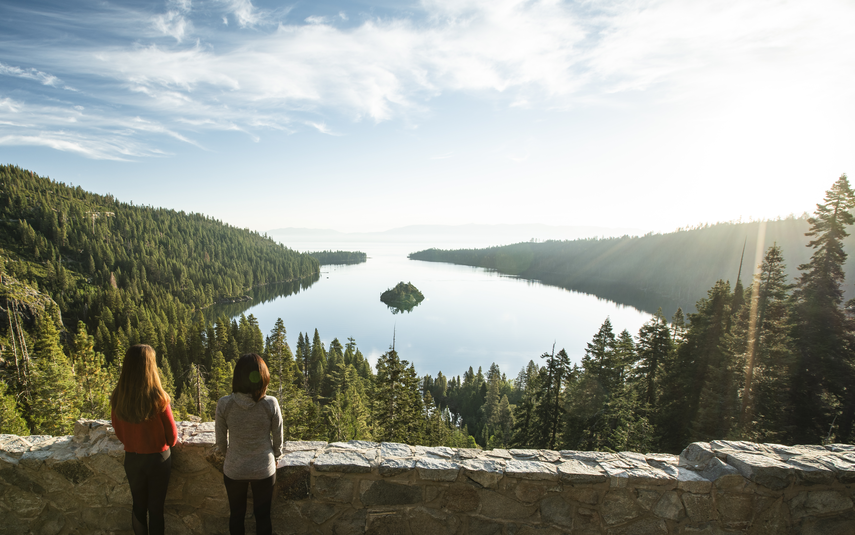
Travel has always been one of America’s greatest ambassadors. The question today is whether politics is drowning out the voices of ordinary Americans.
For generations, the United States has projected an image of openness, curiosity, innovation, and opportunity. Millions of visitors have discovered that beyond the headlines and political debates, Americans are often welcoming, generous, and genuinely interested in learning about the world. Likewise, Americans remain among the world’s most enthusiastic international travelers, eager to experience different cultures, cuisines, histories, and perspectives.
Yet today, many Americans find themselves in an uncomfortable position.
They watch policies and rhetoric coming from Washington and wonder whether they still recognize the country they love. Many feel that decisions made by their government do not reflect their own values.
Proud Democrats, independents, moderate Republicans, LGBTQ+ Americans, Jewish Americans, Muslim Americans, Iranian Americans, Somali Americans, immigrants, scientists, educators, veterans, and countless others may deeply love their country while feeling rejected, insulted, or politically abandoned by those governing in their name.
Some are told, directly or indirectly, that they are less American than others. Some hear public language suggesting that their own country does not care about them. Others feel that entire communities are being reduced to political targets, stereotypes, or enemies.
This creates a painful contradiction.
How can citizens remain proud of their country when they are ashamed of what is being said and done in its name?
Whether one supports or opposes the current administration, one reality has become difficult to ignore: America’s internal divisions are now a global story.
The World Watches America
Every nation experiences political disagreements. Democracies are built on them.
But America’s influence extends far beyond its borders. What happens in Washington affects financial markets in Asia, security in Europe, humanitarian efforts in Africa, tourism in the Caribbean, and diplomatic relations across the Pacific.
When America has a problem, the world has a problem.
Many observers, both within the United States and abroad, believe there is now a growing disconnect between what is said in America and what is actually happening in reality.
The distinction between a lie and the truth appears to be disappearing.
For critics, this confusion begins at the highest levels of government, including the White House. Statements are repeated until they become political identities. Verified facts are challenged. Institutions are attacked when they present inconvenient information. Loyalty to a leader can appear more important than loyalty to reality.
What is said in America is not always what is happening in America.
That gap matters.
When citizens cannot agree on basic facts, democratic debate becomes nearly impossible. When political messaging replaces reality, trust disappears. When trust disappears, allies, visitors, investors, scientists, students, and international partners begin to ask whether American commitments can still be relied upon.
Media polarization has only deepened this crisis of confidence. Americans increasingly consume entirely different versions of reality depending on where they obtain their news.
Some media organizations are dismissed as “fake news,” while other highly partisan outlets are accepted without serious scrutiny. Information is judged not by whether it is accurate, but by whether it supports a preferred political side.
The result is not merely disagreement. It is the collapse of a shared reality. For the rest of the world, this creates confusion about what America truly represents.
Is America still the country that welcomed immigrants, championed scientific discovery, promoted international cooperation, and encouraged cultural exchange?
Or has it become an inward-looking nation, suspicious of outsiders, hostile toward international institutions, and increasingly divided against itself?
The answer is more complicated than either political side may admit.
Travel: America’s Forgotten Strength
Tourism has always been one of America’s greatest diplomatic assets.
Visitors rarely judge a country solely by its politicians. They remember the hotel receptionist who helped them after a delayed flight. The family who invited them to a neighborhood barbecue. The National Park ranger who shared stories about local wildlife. The taxi driver who recommended a hidden restaurant.
They remember strangers who gave directions, restaurant workers who welcomed them, and communities that made them feel at home.
Those encounters shape perceptions far more than speeches.
Likewise, Americans traveling abroad frequently become informal ambassadors. They volunteer, study overseas, support local businesses, learn new languages, make friends, and often return home with a greater appreciation for different cultures.
Americans can sometimes appear a little naive when traveling. They may ask direct questions, speak loudly, or reveal how little they know about a destination.
But many travel with genuine curiosity.
- They want to understand.
- They want to experience.
- They want to see the good in people.
Many Americans have strong religious, family, or community values. They are proud of where they come from, but they are also fascinated by the wider world. They welcome foreign visitors into their towns and cities, and they often become lifelong friends with people they first met through travel.
This is why travel has long been described as the business of peace.
Every successful international journey creates understanding that politics alone cannot.
International Institutions Matter
Another source of concern is the United States’ changing relationship with international organizations.
Critics argue that withdrawing from or reducing participation in institutions such as UNESCO, while remaining outside the UN tourism organization now known as UN Tourism, weakens America’s ability to shape international cooperation in education, culture, heritage, tourism, science, and diplomacy.
Supporters of withdrawal argue that international organizations can be inefficient, politically biased, or insufficiently accountable.
- Those concerns may deserve debate.
- But disengagement carries consequences.
The United States cannot expect to lead every global conversation while repeatedly leaving the table. International organizations may be imperfect, but global problems cannot be solved by one country alone.
Climate change, public health, aviation safety, cultural preservation, artificial intelligence, war, migration, and scientific research do not stop at national borders.
Leadership is difficult from the sidelines.
Science Without Borders
Perhaps nowhere is international cooperation more important than in scientific research.
American universities, laboratories, medical centers, and research institutions have historically attracted some of the brightest minds in the world.
International collaboration has produced life-saving discoveries in medicine, engineering, environmental science, communications, transportation, and technology.
Yet many researchers today express concern about funding uncertainty, political interference, restrictions on international cooperation, and changing government priorities.
Some talented American scientists are considering opportunities abroad. Some foreign researchers are questioning whether the United States remains the best place to study, teach, innovate, or build a future.
When scientific research slows, the consequences are not abstract.
- Treatments are delayed.
- Lives are affected.
- Innovation moves elsewhere.
A nation that drives away its most talented researchers does not merely lose prestige. It may lose discoveries that could save lives around the world.
Science has always advanced fastest when knowledge crosses borders freely.
International Justice and American Credibility
The United States has long presented itself as a defender of freedom, law, democracy, and human rights. Yet critics argue that these principles are too often applied selectively.
International courts are examining allegations involving some of the most serious crimes known to humanity. Arrest warrants and legal proceedings involving political leaders, including Israeli Prime Minister Benjamin Netanyahu and others, have created difficult questions about international law, accountability, sovereignty, and enforcement.
Some governments support these institutions. Others challenge their jurisdiction.
The United States has often resisted international legal mechanisms when they involve American personnel or close allies, even while supporting accountability in other countries.
This creates an unavoidable question. Can international law be credible if it applies strongly to enemies but weakly to friends?
A country that calls itself the land of the free must be prepared to defend legal principles even when doing so is politically uncomfortable.
Otherwise, international law risks becoming not a system of justice, but a system shaped by power.
The Middle East and Global Stability
Parts of the Middle East is again in flames.
- Few ordinary people want this.
- Families do not want war.
- Business owners do not want destruction.
- Travelers do not want fear.
- Hotel workers do not want empty rooms.
- Airlines do not want closed skies.
- Young people do not want their futures defined by conflict.
- Yet violence continues to disrupt countries, regions, communities, and industries.
The consequences spread far beyond the immediate conflict zones. Energy markets are affected. Airlines reroute flights. Insurance costs rise. Conferences are canceled. Tourists stay away. Investment disappears.
- Small businesses suffer first.
- Tour guides lose income.
- Restaurants close.
- Hotels reduce staff.
- Families dependent on tourism struggle to survive.
- Tourism is often among the first industries harmed by conflict and among the last to recover.
- This is why travel and tourism cannot remain silent when peace is threatened.
- Tourism is not separate from peace.
- Tourism depends on peace.
And when tourism succeeds, it can also help sustain peace.
The Cost to America’s Reputation
Brand America has always been larger than any president.
It includes jazz, Silicon Valley, Hollywood, Route 66, national parks, universities, entrepreneurship, volunteerism, religious freedom, innovation, and extraordinary cultural diversity.
It includes civil rights leaders, scientists, musicians, teachers, immigrants, Indigenous communities, religious congregations, small-town families, and people from every imaginable background.
- America is not one political party.
- It is not one television network.
- It is not one president.
Yet international perception increasingly becomes intertwined with political headlines.
Visitors who once associated America primarily with opportunity may now also associate it with polarization, institutional distrust, hostility toward minorities, and political uncertainty.
This should concern everyone.
- Trust is one of the world’s most valuable forms of soft power.
- Reputation takes decades to build.
- It can be damaged much more quickly.
What Can Americans Do?
Many Americans now ask a deeply personal question: How do I represent my country when I disagree with my government? The answer is not to abandon America. The answer is to represent the America they believe in.
Patriotism is not measured by agreement with a president or a political party. It is measured by commitment to democratic principles, constitutional rights, truth, fairness, participation, and the dignity of fellow citizens.
Americans who feel embarrassed, disappointed, or ashamed by the direction of their government do not need to apologize for loving their country.
- They can vote.
- They can speak.
- They can organize.
- They can volunteer.
- They can defend neighbors who are being targeted.
- They can support independent journalism.
- They can challenge misinformation.
- They can welcome visitors.
- They can travel.
Travel itself can be an act of diplomacy.
- Every respectful conversation overseas helps counter stereotypes.
- Every international friendship weakens prejudice.
- Every cultural exchange reminds the world that governments and citizens are not identical.
Americans traveling abroad should not feel compelled to defend every action of their government. They should be honest about their concerns while remaining respectful of different perspectives.
They should do what Americans often do best: be open, curious, generous, and willing to listen.
What Can the World Do?
The international community also bears responsibility.
- It is easy to judge an entire nation through the actions of its leaders.
- It is much harder, but far more accurate, to distinguish governments from people.
- Most Americans did not write every policy.
- Many actively oppose policies they believe undermine equality, international cooperation, democratic values, or America’s standing in the world.
- Others support those policies because they believe they strengthen national security, sovereignty, or economic prosperity.
- Such diversity of opinion exists in every democracy.
- The world should continue engaging with Americans.
- Visitors should continue traveling to the United States.
- American travelers should continue exploring the world.
- Universities should continue exchanging students.
- Scientists should continue collaborating.
- Artists should continue performing.
- Business leaders should continue investing.
- Communities should continue welcoming one another.
Tourism should continue building bridges where politics constructs walls.
A Personal Pledge
The reason I write this is simple. It is based on my deepest belief as a German American.
If you visit the United States of America as a friend, you will be treated as a friend.
This is not a political slogan. It is what I believe about the American people.
Despite today’s divisions, despite the rhetoric, despite the headlines, I continue to believe in the kindness, generosity, curiosity, and openness of ordinary Americans.
They are not perfect. No nation is.
But they remain among the world’s most enthusiastic travelers and most welcoming hosts. They invite visitors into their communities, their restaurants, their cities, their homes, and their lives.
They celebrate diversity far more than today’s political atmosphere may suggest.
That is why I refuse to judge every American by the actions of the American government, just as I would never judge the people of any nation solely by the politicians who temporarily govern them.
So this is my pledge to the world
Visit The USA
This is a place where travelers can chart their own course, where stories unfold in unexpected places and discovery happens one connection at a time. Whatever type of travel you seek, the USA is ready…
- Continue to visit the United States.
- Continue to meet Americans.
- Continue to speak with them.
- Continue to welcome American visitors into your countries, your cities, your businesses, and your homes.
- When you receive American visitors, treat them like friends.
- Because they are not their government.
- They are mothers and fathers, students and teachers, entrepreneurs and artists, veterans and volunteers, dreamers and explorers.
- They travel for the same reasons all of us do: to discover, to learn, to understand, and to connect.
- Travel has never been only about geography.
- It has always been about people.
The tourism industry has long called itself the business of peace. There has rarely been a time when that mission mattered more.
- America’s political divisions will eventually change, as they always have throughout its history.
- Elections come and go.
- Administrations change.
- Policies are rewritten.
- But friendships can outlast governments.
- If the world begins treating governments and citizens as one and the same, everyone loses.
If, instead, we continue to meet one another with curiosity instead of suspicion, respect instead of prejudice, and friendship instead of fear, travel can once again prove why it remains one of humanity’s most powerful forms of diplomacy.
- That is my hope.
- That is my pledge to the world.
- And I hope it becomes yours.
In the end, governments write policies. People write history.
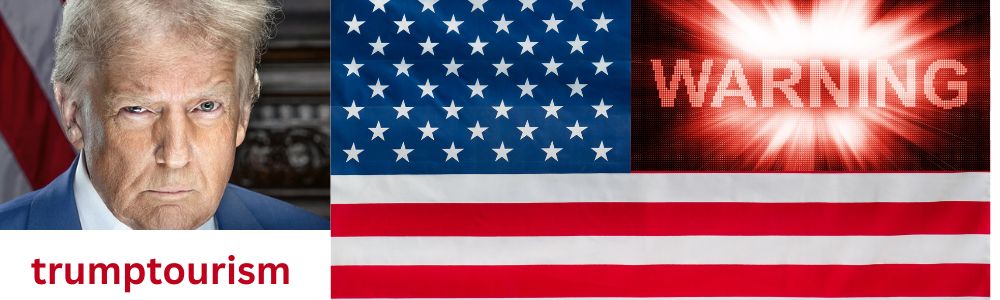
Trump Tourism : Join the Fight | Trump Tourism
Travel from and to the United States and the industry behind has changed under US President Donald Trump. There are new challenges, expectations, and regulations.