Driving in Germany for the First Time: What You’ll Wish You Knew Before the Trip
This post may contain affiliate links. If you click on one and make a purchase, I might earn a small commission (at zero extra cost to you), which helps me keep this blog running.
We drove in Germany twice, years apart, on road trips from Romania. My husband was the driver both times, and he had already driven in several European countries while traveling for work. So when we were driving in Germany for the first time, roundabouts, narrow streets, city traffic, and driving on the right were already familiar.
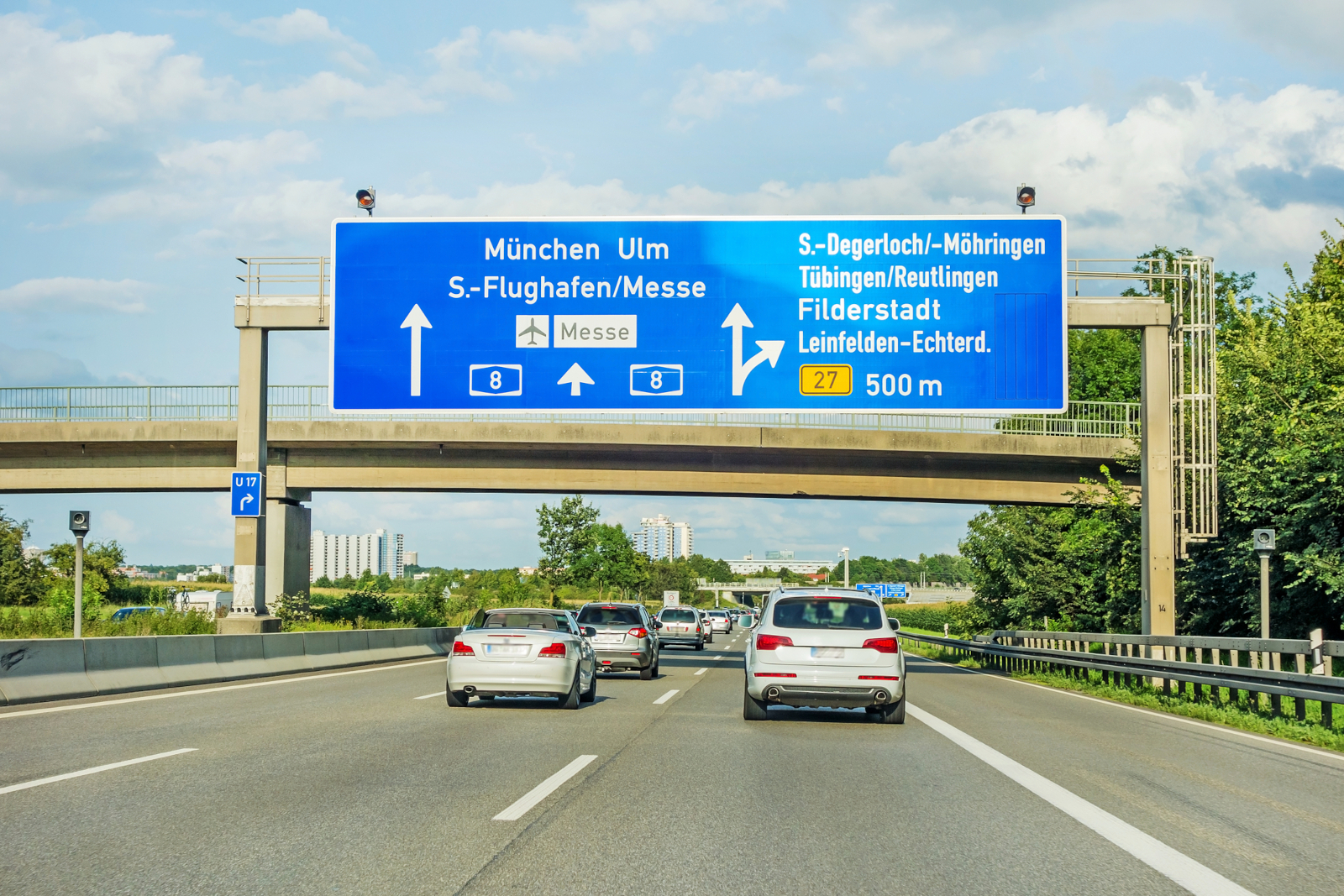
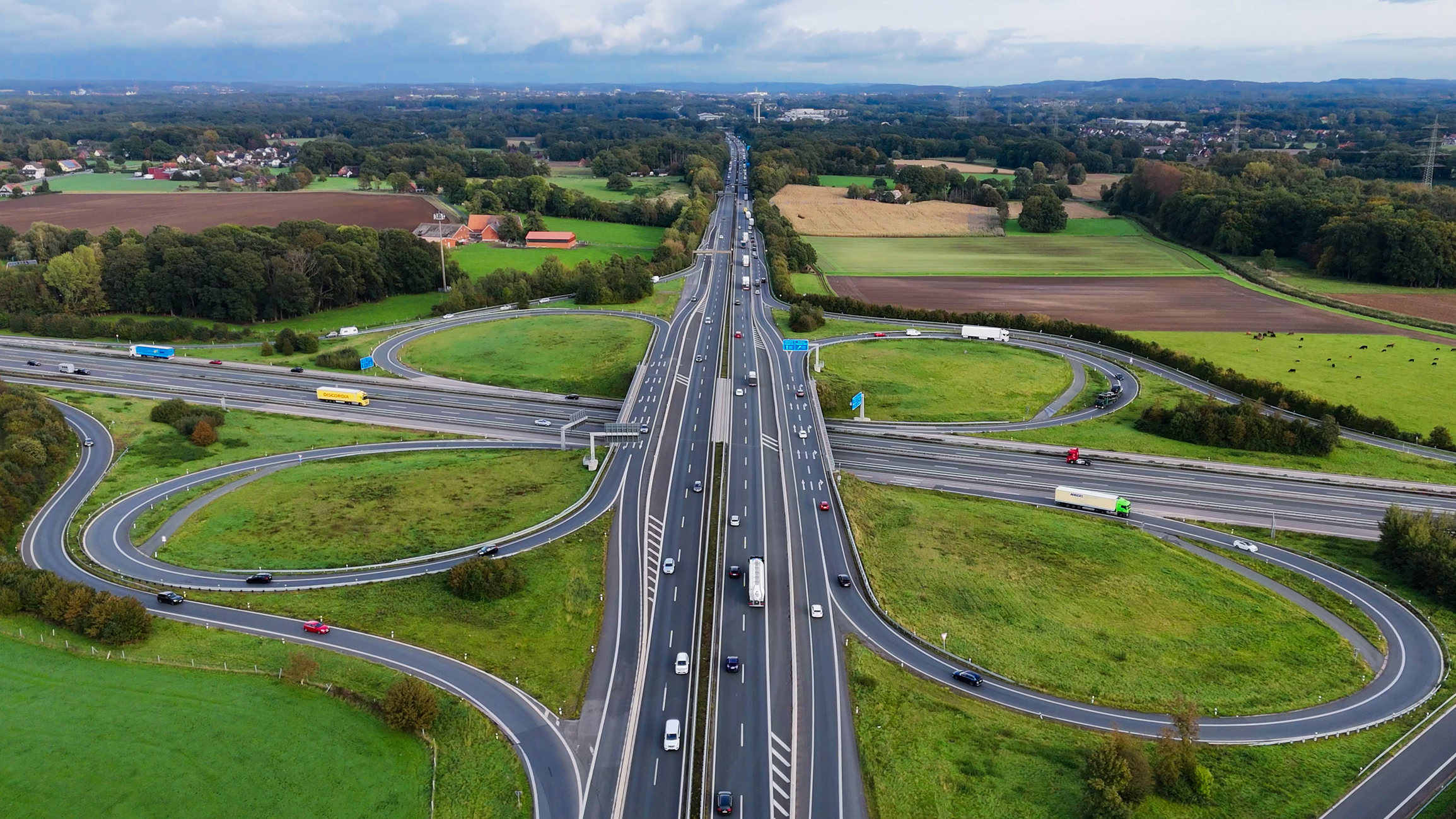
The Autobahn was what we were most curious about. Of course, we wanted to see what it was like to drive on a section with no speed limit. We did, but we also encountered posted limits, roadworks, narrow construction lanes, and traffic jams. The experience was interesting, but far more varied than the simple “no speed limit” description suggests.
As we received numerous questions from our friends before their trips on what it is like to drive through Germany, I decided to share our experience and to let you know what to expect.
ID 99808018 ©Aldorado10 | Dreamstime.com
The Autobahn: What It Is Actually Like to Drive With No Speed Limit
Yes, Germany has Autobahn sections with no fixed speed limit, and driving on one is an interesting experience.
The entire Autobahn network is not unrestricted. Many sections have permanent or temporary speed limits, especially around cities, interchanges, roadworks, and areas where the road layout requires lower speeds. On our second trip, in particular, we encountered many construction zones and temporary limits. We would drive through an unrestricted stretch, then see the limit drop to 130, 100, 80, or lower.
On unrestricted sections, Germany recommends a speed of 130 km/h, known as the Richtgeschwindigkeit. It is an advisory speed rather than a fixed maximum when no lower speed limit is posted. The recommendation is set out in Germany’s official Autobahn advisory-speed regulation.
Watch the signs instead of planning the journey around the idea that every motorway section will be fast. Roadworks may bring narrow lanes, temporary markings, trucks, and lane shifts, so the drive can change quickly.
When a Lane Ends: Use the Zipper Merge
Roadworks often reduce two lanes to one. When a lane ends or cannot be used, continue in your lane until you reach the merge point. Vehicles should then alternate: one vehicle from the continuing lane, followed by one from the lane that is ending.
Moving over too early may feel polite, but it leaves part of the road unused and can make the queue longer. Germany’s zipper-merge rule, called the Reißverschlussverfahren, requires drivers to merge immediately before the lane ends or becomes blocked. The rule appears in Section 7(4) of the German Road Traffic Regulations.
The biggest difference on unrestricted sections is how fast another car can reach you from behind. You may check the mirror and see a car at what looks like a comfortable distance, yet that distance disappears very quickly when the other vehicle is traveling much faster.
My husband checked the mirrors carefully before every lane change. The speed difference between lanes makes that check especially important. The left lane is used for overtaking. Once you have passed and can safely return to the right, you should do so.
We did not turn the Autobahn into a race. Fuel consumption increases considerably after around 120 km/h, at least with our car, so we preferred a steady speed. We enjoyed the unrestricted sections without driving as fast as the car could manage.
Traffic Lights: Two Details Foreign Drivers Should Know
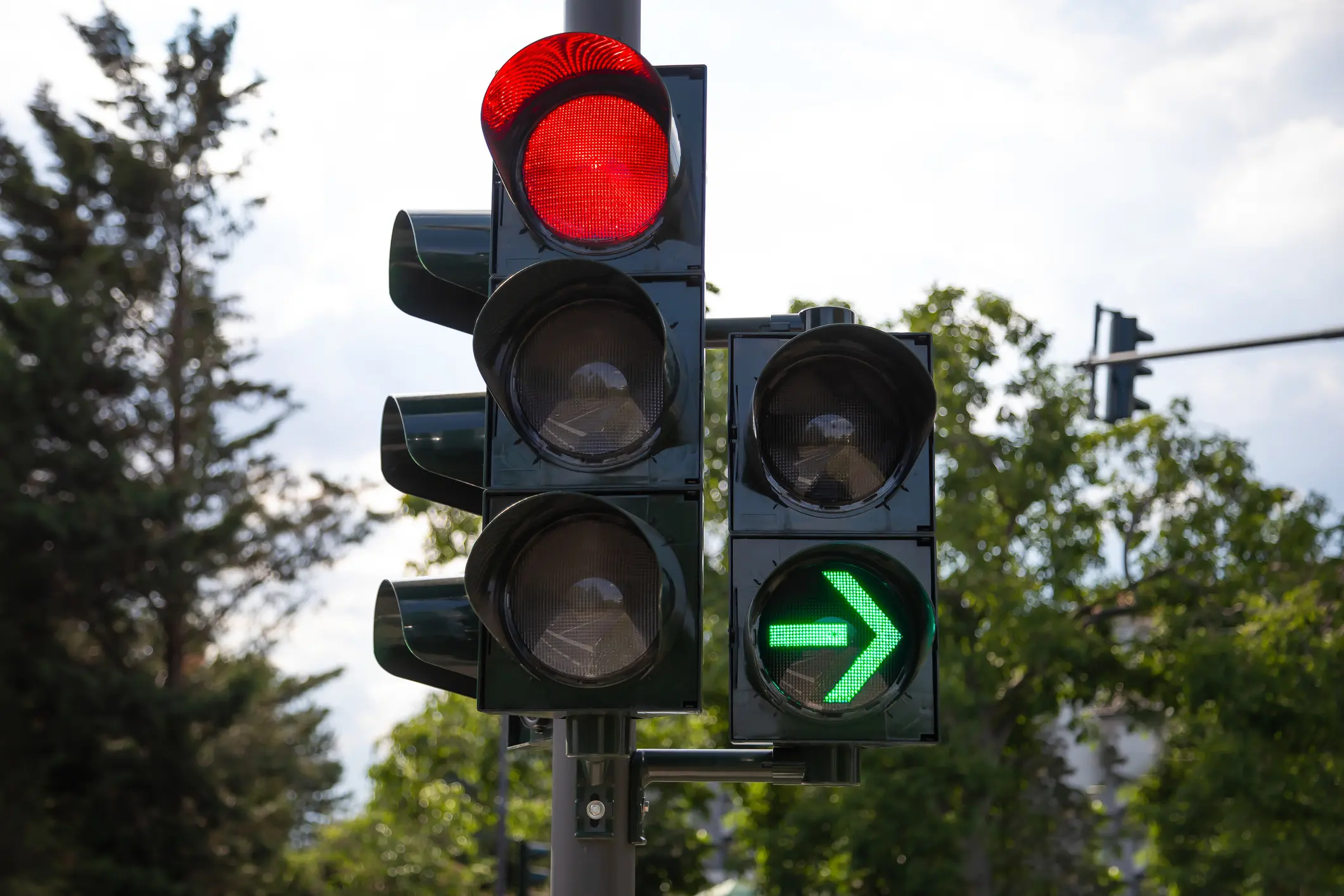
ID 201195714 ©Mattin Ott | Dreamstime.com
German traffic lights use the familiar red, yellow, and green signals, but there are two details that may be new to some visitors.
Before the light changes from red to green, red and yellow appear together. This tells you that green is coming next. You can prepare to move, especially if you drive a manual car, but you still wait until the light turns green.
For visitors from the United States, the position of the traffic lights may require more attention. Signals are often placed close to the stop line, before the intersection, rather than on the far side. If you drive beyond the line, you may no longer have a comfortable view of the light.
Turning right on red is generally not permitted in Germany. A permanent green arrow sign beside the red light may allow the turn, but you must first come to a complete stop and yield to pedestrians, cyclists, and other traffic. An illuminated green arrow allows traffic to proceed in the direction shown. If there is no green arrow, wait for the green light.
Rechts vor Links: Right Before Left at Unmarked Intersections
Rechts vor Links means right before left. At an intersection without traffic lights, priority signs, stop signs, or yield signs, a vehicle approaching from your right generally has priority.
This rule appears frequently in residential areas, smaller towns, and streets with lower speed limits. The road you are following may look wider or busier than the street on your right, but its appearance does not give it priority.
Slow down when approaching an unmarked intersection and check the right side. Do not wait until you are already entering the junction to notice another car.
You will also see yellow diamond-shaped signs marking priority roads. While you remain on that road, you have priority at intersections unless signs or traffic lights indicate otherwise. Pay attention when the priority-road sign ends.
Roundabouts in Germany
Roundabouts will already be familiar to most European drivers. At a standard German roundabout marked with both the roundabout sign and a yield sign, vehicles already circulating have priority.
You yield before entering and signal when leaving. You do not normally signal when entering.
Check the signs rather than relying only on the circular shape of the junction. If the usual yield sign is missing, the priority arrangement may be different.
Stau and Rettungsgasse: What to Do When Traffic Stops
Stau is the German word for a traffic jam, and roadworks or heavy traffic can bring motorway traffic to a crawl.
When traffic on a motorway or a road outside a built-up area with at least two lanes in the same direction slows to walking pace or stops, drivers must create a Rettungsgasse, an emergency corridor.
The rule is easy to remember. Vehicles in the far-left lane move as far left as possible. Vehicles in every other lane move to the right. The open corridor is formed between the leftmost lane and the lanes beside it.
Drivers should form the corridor as traffic slows, before an ambulance, fire truck, or police vehicle appears. Keep the space open until traffic begins moving normally again, and never drive through the corridor yourself.
We saw how naturally drivers formed it. People did not wait for sirens or try to gain a few meters by blocking the open space. They moved to the sides and left the middle clear.
Germany treats this as a serious road-safety rule. According to the Federal Ministry of Transport, failing to create an emergency corridor or using it without authorization can bring a fine of €200 to €320, two penalty points, and a one-month driving ban.
Google Maps Worked Very Well for Us
At home in Romania, we use Waze more often. Outside the country, we found Google Maps more reliable for our trips.
We simply entered our destination, usually the hotel, and followed the route. It worked very well for us in Germany, including for motorway exits, city streets, and our drive from Munich to Legoland.
We still followed the road signs first. A navigation app may take time to update a temporary speed limit, a construction diversion, a closed street, or a new traffic arrangement. The sign in front of you has priority over the information on the screen.
Before leaving, save the hotel address, parking address, reservation details, emergency numbers, and route on your phone. I also keep offline access to the essential information listed in this travel phone checklist.
Parking and Narrow Streets
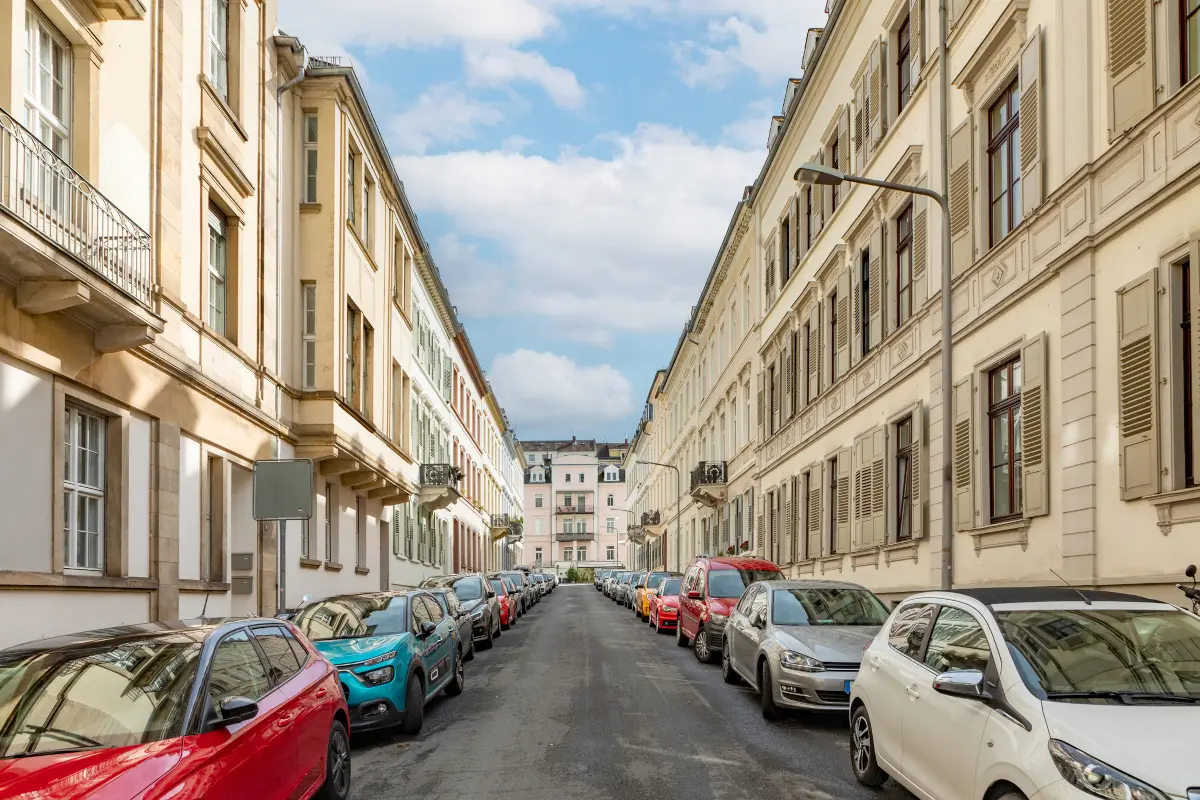
ID 329465987 ©Meinzahn | Dreamstime.com
Coming from Romania, we were used to narrow streets and compact parking spaces, but they can require more adjustment for visitors from the United States. A friend from the US who visited Romania noticed the same difference because he was accustomed to wider roads and parking spaces at home.
In German city centers, the extra difficulty often stems from one-way streets, pedestrian zones, underground garages, residential restrictions, and signs with multiple parking conditions.
Check the parking arrangements before reaching your accommodation. “Parking nearby” may refer to a public garage several streets away, while private hotel parking may have limited spaces, a height restriction, or a separate entrance that is easy to miss.
When visiting a historic center, choose the car park before entering the busiest streets. Entering the parking address directly into Google Maps can be easier than navigating to the attraction first and then looking for somewhere to leave the car.
Parkschein and Parkscheibe
A Parkschein is a ticket purchased from a parking machine. Read the machine and the nearby signs to see when payment is required, how long you may stay, and whether the ticket must be displayed in the car.
A Parkscheibe is a parking disc. When a sign requires one, place it visibly inside the car and set it to the next half-hour mark after your arrival. If you park at 10:05, for example, set the disc to 10:30. The sign tells you how long you may remain.
Many German cars and rental cars already have a parking disc. Check before you need it.
Umweltzone and the Emissions Sticker
Several German cities have low-emission zones called Umweltzonen. Vehicles entering these zones must display the correct emissions sticker.
You do not need the sticker simply to cross the German border or drive through parts of the country outside these zones. You need it when entering a marked low-emission zone.
If you drive your own car from Romania or another country, arrange the sticker before entering the affected city. The sticker is linked to the car’s registration number. If you rent a car in Germany, check that it already has one.
The German Environment Ministry provides the official explanation of the sticker and low-emission zones.
City Driving: Cyclists, Pedestrians, and Trams
City driving requires close attention to cycle lanes, pedestrian crossings, bus lanes, and trams.
Check the cycle lane before turning, even when the traffic lane beside you appears clear. A cyclist may be approaching from behind and continuing straight while you turn across the lane.
Pedestrians have priority at marked zebra crossings. Slow down when someone is waiting to cross instead of continuing until the person steps into the road.
Tram tracks add another element in cities such as Munich. Watch the lane markings and traffic signals carefully, particularly where cars cross the tracks or share part of the road with trams.
If your trip is centered on Munich, the car is often better left at the hotel. The city’s public transportation worked very well for us, and the historic center is easy to explore on foot.
Fuel Stations: Fill First, Then Pay
At the staffed fuel stations we used, we filled the tank first and paid inside afterward. This is common across Europe, including Germany.
Some stations have card payment at the pump, while unattended stations may require a card or preauthorization before fuel is released. Read the instructions on the pump if the station has no shop or cashier.
Higher speeds also mean higher fuel use. Include fuel, parking, environmental stickers, and any vignettes or tolls required in neighboring countries when calculating the trip. They can add a noticeable amount to the real cost of your vacation.
Driving License, Documents, and Equipment
A valid Romanian driving license is an EU license and can be used in Germany. Visitors holding licenses issued outside the EU or EEA should check whether their license requires an official translation or an International Driving Permit.
The German Federal Ministry of Transport explains the current rules for foreign driving licenses.
Keep your driving license, identification document, vehicle registration, and insurance information with you. If you are renting, keep the rental agreement accessible as well. Before an international road trip, I would also check the relevant items in this travel document checklist.
For a cross-border road trip, carry a warning triangle, first-aid kit, and reflective vest, and check the compulsory equipment rules for every country on your route. Keep the reflective vest inside the passenger compartment, such as in the glove compartment or a door pocket, so you can put it on before stepping out after a breakdown. Do not bury it beneath luggage in the trunk.
Germany requires suitable winter tires when roads have black ice, snow, slush, ice, or frost. Since October 1, 2024, the tires must display the Alpine mountain-and-snowflake symbol; an M+S marking alone is no longer sufficient. If you are renting during the colder months, confirm the tires with the rental company. If you are driving your own car, check them before leaving Romania.
Germany does not have a general motorway toll for ordinary passenger cars, but the countries on your route may have vignettes or tolls. Check Austria, Hungary, Czechia, Switzerland, Slovenia, and any other country you will cross separately.
Is a Car Useful for a Germany Trip?
A car is very useful when your plans include smaller towns, castles, lakes, theme parks, countryside routes, or several stops in one trip. It is also convenient for families traveling with luggage.
We used the car for our day at Legoland Germany, and it was the easiest option for us. We entered the destination into Google Maps and drove there directly from our hotel in Munich.
If cars are part of your reason for visiting Germany, you could include Stuttgart, home to the Mercedes-Benz and Porsche museums, or visit BMW Welt and the BMW Museum in Munich.
Inside Munich, we used public transport for most of our sightseeing. Our five-day Munich itinerary combined city days with the Legoland drive, so the car was useful without becoming our default transportation every day.
If you are flying to Bavaria rather than arriving in your own car, check the insurance, deposit, cross-border permission, fuel policy, and vehicle size before renting a car in Munich.
For a city-only break, you may not need a car at all. Parking and traffic can cost more time than they save. These Munich tips for first-time visitors also cover transport, Sunday closures, cash, and other details worth checking before arrival.
Mistakes to Avoid When Driving in Germany for the First Time
ID 294963683 ©Elena Frolova | Dreamstime.com
Expecting every Autobahn section to have no speed limit. Unrestricted sections exist, but many parts of the Autobahn have permanent or temporary limits. Roadworks, traffic, tunnels, interchanges, and weather can all reduce the permitted speed.
Moving into the left lane without checking carefully. A fast vehicle can close the distance behind you much sooner than expected. Check the mirrors properly before changing lanes, use the left lane for overtaking, and return to the right when it is safe.
Driving faster simply because there is no posted limit. Choose a speed that feels comfortable and suitable for the conditions. We preferred a steady speed, especially since our car used considerably more fuel above approximately 120 km/h.
Merging too early when a lane ends. Use both lanes until the merge point, then alternate with vehicles in the continuing lane. This is the German zipper-merge system.
Missing the Rechts vor Links rule. At an unmarked intersection, traffic approaching from the right generally has priority. Slow down and check the right side, even when your road appears wider.
Waiting for sirens before forming a Rettungsgasse. Create the emergency corridor as soon as qualifying traffic slows to walking pace or stops. Vehicles in the leftmost lane move left, while all other vehicles move right.
Entering an Umweltzone without checking the car. If your route enters a marked low-emission zone, make sure the vehicle has the required emissions sticker before arrival.
Following the navigation app instead of the road signs. Google Maps worked very well for us, but temporary limits, diversions, access restrictions, and construction signs always take priority over the app.
Using the car for every day of the trip. A car is useful for smaller towns, theme parks, castles, lakes, and multi-stop routes. Inside well-connected cities, public transport may save you the trouble of traffic and parking.
Conclusion
We found driving in Germany pleasant and generally predictable. The roads were well marked, drivers respected lane discipline, and even fast Autobahn traffic felt orderly when everyone followed the rules.
The unrestricted sections were interesting, but they were only one part of both trips. We also encountered roadworks, posted limits, traffic jams, residential priority rules, parking signs, and city traffic. Knowing Rechts vor Links, understanding how to form a Rettungsgasse, checking the environmental sticker, and looking carefully before moving into the left lane all helped.
A car was very useful for routes outside city centers and for places that would have taken longer to reach by public transport. In well-connected cities, we often preferred to park and continue on foot or by public transport.
For us, the best approach was simple: know the route, watch the signs, keep a steady speed, and use the car where it saves time.
Frequently Asked Questions About Driving in Germany
Is There Really No Speed Limit on the German Autobahn?
Some Autobahn sections have no fixed speed limit, while many others have permanent or temporary limits. Roadworks, city areas, interchanges, bends, congestion, and weather can all bring lower posted limits. On unrestricted sections, the recommended speed is 130 km/h.
Can I Drive in Germany With a Romanian Driving License?
Yes. A valid Romanian license is an EU driving license and is recognized in Germany.
Do I Need an International Driving Permit in Germany?
Drivers with valid EU or EEA licenses generally do not need an International Driving Permit. Visitors with licenses issued elsewhere should check the current German requirements and their rental company’s policy.
Can You Turn Right on Red in Germany?
A permanent green arrow sign may allow you to turn right while the main light is red. You must first come to a complete stop and yield to pedestrians, cyclists, and other traffic. An illuminated green arrow allows traffic to proceed in the direction shown. If there is no green arrow, wait for the green light.
What Does Rechts vor Links Mean?
Rechts vor Links means right before left. At an unmarked intersection, a vehicle approaching from your right generally has priority.
What Is a Rettungsgasse?
A Rettungsgasse is the emergency corridor formed when traffic slows to walking pace or stops on a motorway or a road outside a built-up area with at least two lanes in the same direction. Vehicles in the leftmost lane move left, while vehicles in all other lanes move right.
Do I Need an Umweltzone Sticker?
You need the correct emissions sticker when entering a marked German low-emission zone. You do not need one simply to cross the border or drive outside those zones.
Is Google Maps Reliable for Driving in Germany?
It worked very well for us on both city and motorway routes. We still followed road signs whenever they differed from the information shown by the app.
Is It Better to Drive or Use Public Transportation in Germany?
A car is useful for smaller towns, countryside routes, castles, lakes, theme parks, and multi-stop trips. Public transportation is often easier inside major cities such as Munich, Berlin, and Hamburg.
More amazing articles for you:

Violeta-Loredana Pascal is a communications expert, business mentor, and the founder of Earth’s Attractions and PRwave INTERNATIONAL. A pioneer in the Romanian digital PR landscape since 2005, she holds a degree in Communication and Social Sciences from SNSPA Bucharest. Violeta is a senior trainer at AcademiadeAfaceri.ro, where she leverages over 20 years of experience to teach professional courses in PR strategy and workplace productivity. By blending high-level business consulting with a passion for holistic travel and wellness, she empowers solopreneurs to overcome procrastination, build profitable brands, and design a life of purposeful adventure.