Louvre vs Musée d’Orsay: Which Paris Museum Should You Visit?
This post may contain affiliate links. If you click on one and make a purchase, I might earn a small commission (at zero extra cost to you), which helps me keep this blog running.
Choosing between the Louvre and Musée d’Orsay can be difficult. I visited both museums during my trip to Paris. Musée d’Orsay was the first museum – and, in fact, the first major attraction – I visited in the city. I later spent an entire day exploring the Louvre, moving through the sections that were open and slowing down whenever I reached something I especially wanted to see.
The two visits were extraordinary, yet they were nothing alike.
In this Louvre vs Musée d’Orsay comparison, I’ll look at the collections, famous masterpieces, crowds, queues, walking, museum fatigue, ticket prices, time needed, and the type of Paris itinerary that works best with each one. I’ll also explain which museum suits different interests and travel styles.
And, after comparing them from every useful perspective, I’ll tell you which one I would choose if I could return to only one – even though one of these museums is dedicated to an artistic movement I absolutely love.
Practical information and prices were checked in July 2026. Museum access, room availability, ticket policies, and opening hours can change, so confirm the latest details before your visit.
ID 45250947 ©Ixuskmitl | Dreamstime.com
The Louvre and Musée d’Orsay Offer Two Completely Different Museum Experiences
The Louvre and Musée d’Orsay are sometimes presented as though they were competing versions of the same attraction: one enormous and famous, the other smaller and easier to visit. But they are far different than that.
The Louvre moves through civilizations, dynasties, religions, empires, archaeological discoveries, sculpture, decorative arts, and centuries of European painting. You may walk from ancient Mesopotamia to Egypt, Greece, Renaissance Italy, Islamic art, French royal rooms, and nineteenth-century interiors in a single visit.
Musée d’Orsay concentrates on a much shorter period, but that concentration is one of its greatest strengths. Instead of moving across thousands of years, you can follow the transformation of Western art through Realism, Impressionism, Post-Impressionism, Symbolism, sculpture, photography, architecture, and decorative arts.
This is also why both museums appear so prominently among the best Paris museums. They complement one another far more than they overlap.
The 1848 handoff between the Louvre and Musée d’Orsay
The Louvre’s Western art collections broadly extend from the Middle Ages to 1848, alongside its extensive collections from earlier civilizations. Musée d’Orsay focuses on works produced from 1848 to 1914. This isn’t an absolute rule that determines the location of every work created before or after a specific date. Museum collections are shaped by acquisitions, transfers, curatorial decisions, and the history of individual objects.
Still, the chronological division gives you an immediate clue.
If you are drawn to ancient Egypt, Mesopotamia, classical sculpture, Renaissance art, royal objects, and historical breadth, you will find far more of what they’re looking for at the Louvre.
If you are fascinated by Monet, Manet, Renoir, Degas, Van Gogh, Cézanne, Gauguin, Seurat, Sisley, and the artistic changes of the nineteenth century, you will naturally be pulled toward Musée d’Orsay.
What Visiting the Louvre Actually Feels Like
The Louvre isn’t simply a large art museum. The building itself changes the experience.
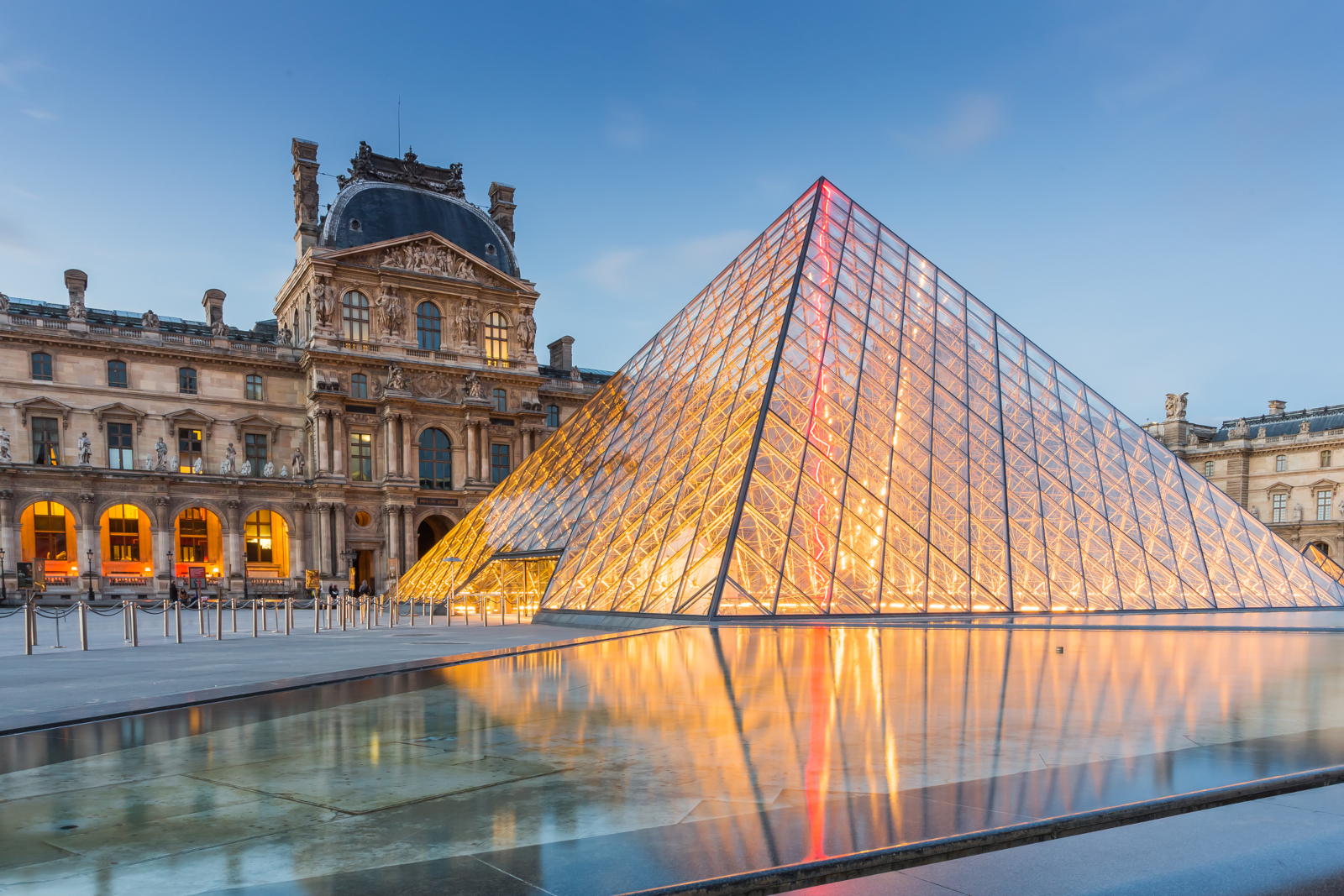
You enter a former royal palace through or beneath the famous glass Pyramid, then move through the Denon, Sully, and Richelieu wings across several levels. Galleries open into staircases, courtyards, long corridors, monumental rooms, and historic apartments.
Even before looking closely at the collections, there’s a sense of scale that photographs can’t fully reproduce. The Pyramid, the palace façades, the courtyards, and the view toward the Tuileries make the Louvre feel connected to Paris in a way that extends far beyond its exhibition rooms.
I had only one full day there. Some galleries were undergoing renovation and several exhibits were closed, yet I enjoyed every part of the visit that was available.
I saw the Mona Lisa, the Code of Hammurabi, Venus de Milo, Egyptian objects, Near Eastern collections, paintings, sculptures, decorative arts, and rooms that felt like attractions in their own right. I also spent time with the Greek sculptures I had previously known only from books.
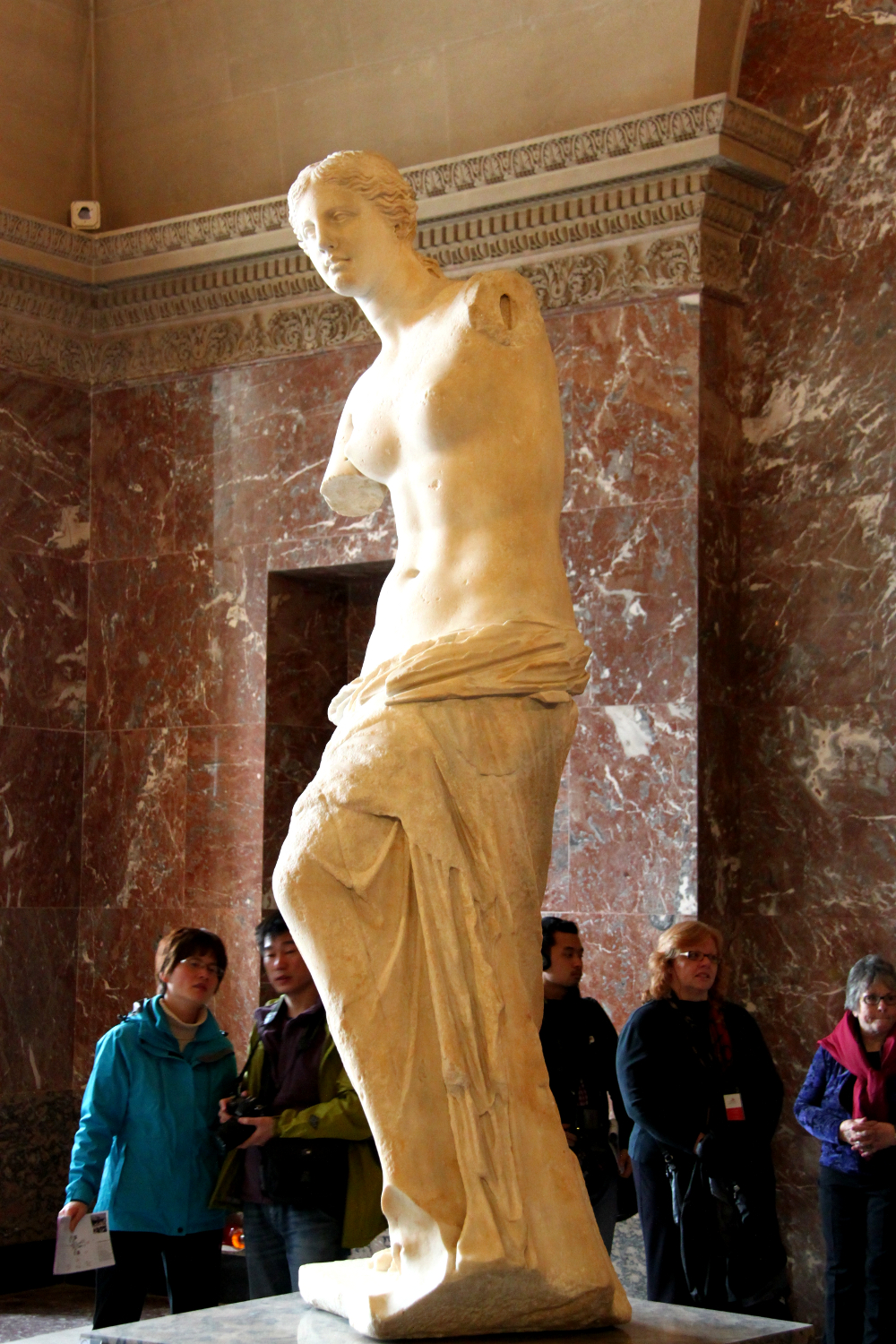
Standing near works you’ve seen reproduced for years has a special effect. Venus de Milo was no longer an image on a page. The sculpture was in front of me, occupying a real space that I could walk around and study.
That happened repeatedly at the Louvre.
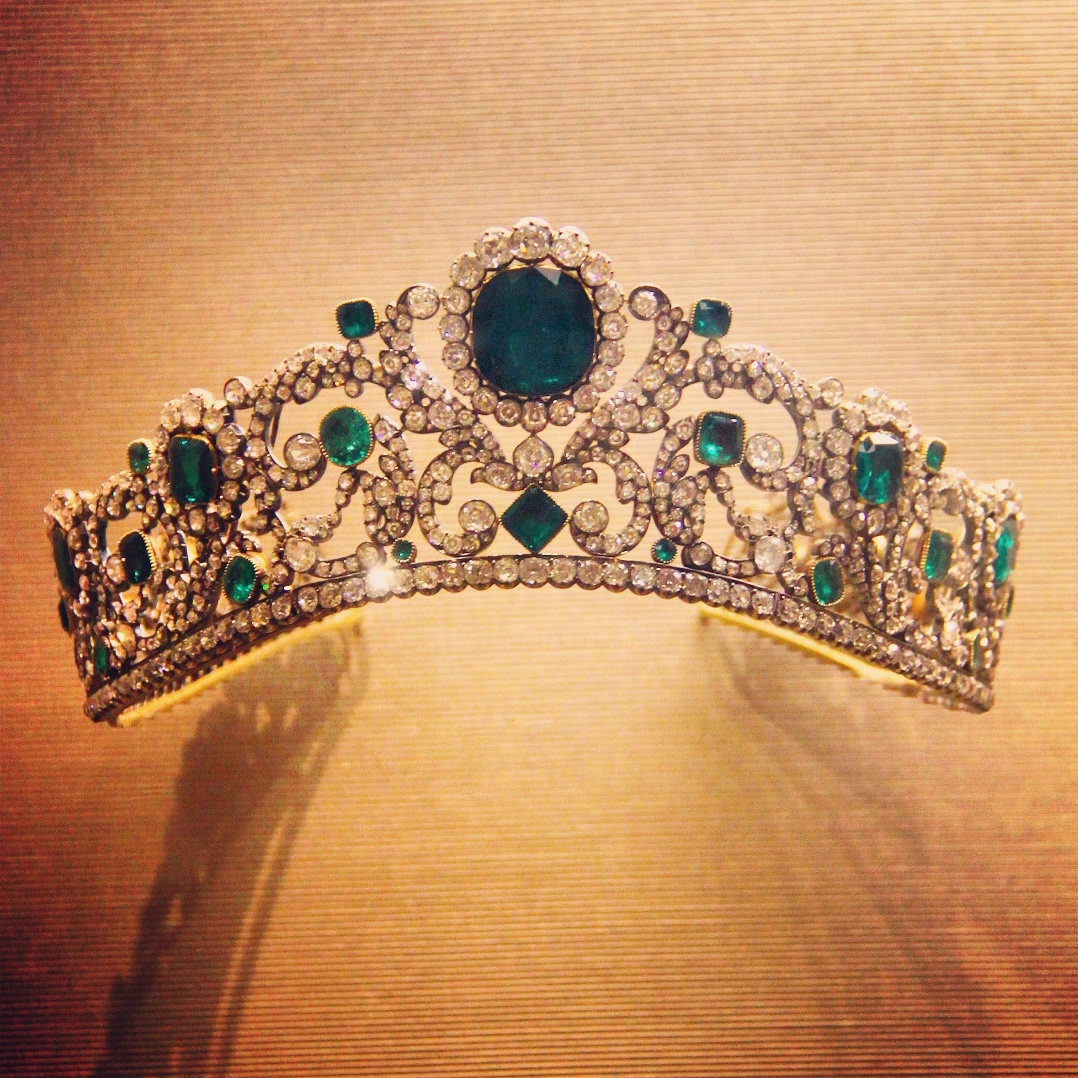
The famous works attract the largest crowds, but many of my strongest memories came from other rooms. The jewels, for example, immediately caught my attention. I slowed down to look at the elaborate princesses’ jewelry, crowns, brooches, gemstones, and decorative details.
Years later, those objects returned to my mind when I reflected on the fate of the Louvre jewels and how fortunate travelers are to see vulnerable pieces of history while they’re still on public display.
By the time we reached the Galerie d’Apollon and some of the later sections of our route, we were tired. I still took my time with the pieces I cared about. Fatigue didn’t erase the fascination.
Can you see the entire Louvre in one day?
The Louvre’s official advice says it’s impossible to see everything in one day, and that’s true when “see everything” means studying every displayed object, reading every label, and exploring every accessible room carefully.
There’s another way people use the phrase, however.
You can move through the Louvre in one full day, cover a very large part of the museum route available on that date, and still stop longer at the pieces that mean the most to you. That’s what I did.
I didn’t study every object. No one could. I did experience the museum as a whole rather than limiting my visit to the Mona Lisa and three nearby masterpieces.
Travelers who enjoy museums and have the stamina can attempt a similar full-day visit. You’ll need an early entry, comfortable shoes, a map, brief breaks, and a clear understanding that some rooms may be closed.
A four-to-six-hour visit calls for a more selective approach. Decide which departments or works have the highest priority, then build the route around them.
For example, one person may choose the Mona Lisa, Winged Victory of Samothrace, Venus de Milo, and Greek and Roman sculpture. Another may care more about the Code of Hammurabi, Mesopotamia, and ancient Egypt. Someone else may prefer Italian painting, Islamic art, the Napoleon III apartments, or decorative objects.
There’s no obligation to follow the same highlights route as everyone else.
A fast Louvre visit can still be an excellent visit. The key is knowing whether you’re attempting a broad tour of the museum or concentrating on a few sections. Wandering without any priorities consumes far more time than deliberately crossing the palace to reach something you genuinely want to see.
The crowds and physical effort at the Louvre
The Louvre’s most obvious disadvantage is the amount of energy it can demand.
There’s extensive walking. Moving from one distant collection to another may involve several levels, stairs, escalators, corridors, and repeated checks of the map. A room you expected to use as part of your route may be closed, requiring a detour.
The crowds don’t spread evenly either. The area around the Mona Lisa can be packed while another gallery only a few rooms away feels considerably easier to explore.
For me, the scale remained part of the appeal. Getting tired didn’t make the visit unsuccessful. I knew I had tried to fit an enormous museum into one day, and I was pleased with how much I had seen.
Still, anyone with limited stamina, knee problems, difficulty climbing stairs, or a strong dislike of crowded interiors should take the physical demands seriously. The Louvre can provide mobility equipment and accessible routes, but distances within the building remain substantial.
What Visiting Musée d’Orsay Actually Feels Like
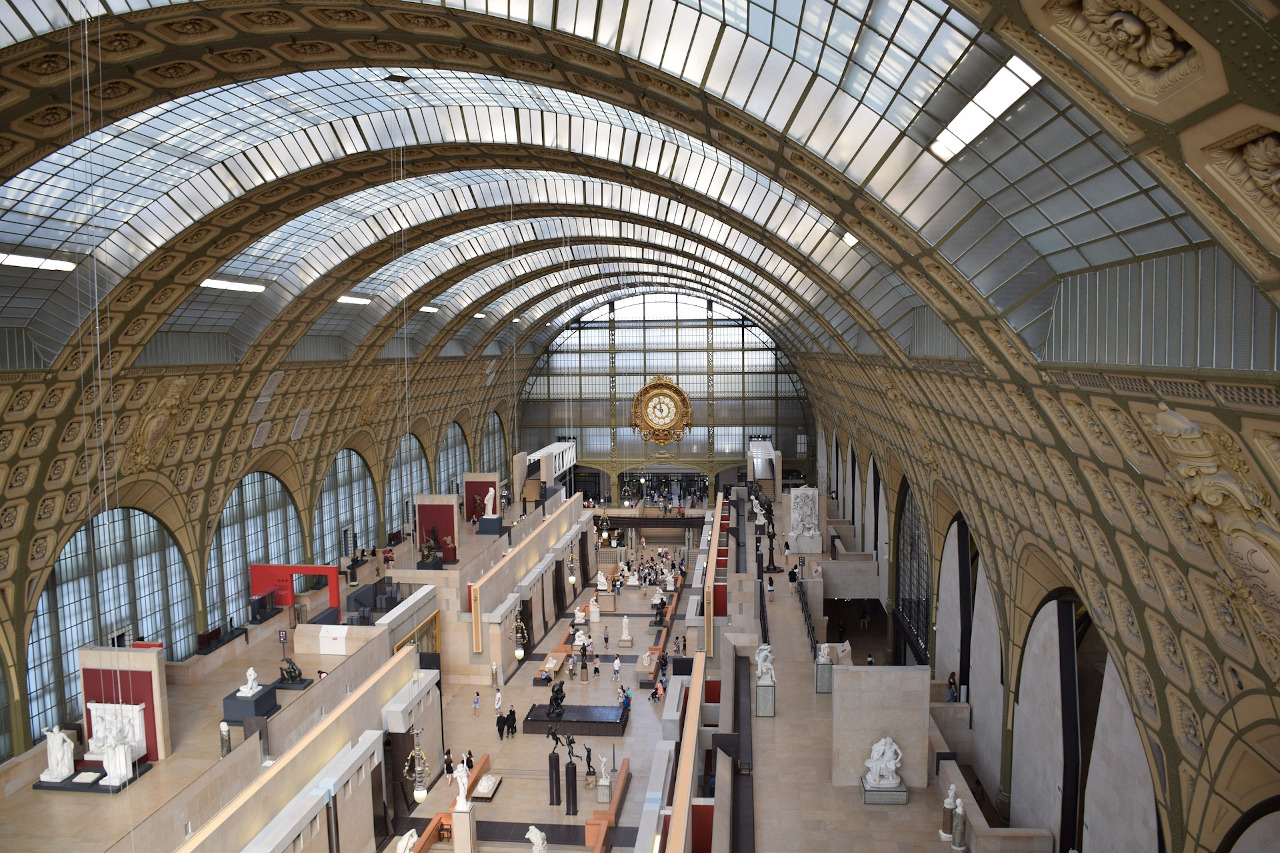
Musée d’Orsay made a strong impression before I saw a single painting.
It occupies the former Gare d’Orsay, a Beaux-Arts railway station built around the turn of the twentieth century. The vast central nave, glass roof, sculptural displays, clocks, and open sightlines give the museum an identity of its own.
It feels grand, but it’s easier to understand spatially than the Louvre. From the central area, you quickly gain a sense of the building and how the collections are arranged.
My visit began on a cloudy, windy March day. Musée d’Orsay was the first major attraction I visited in Paris, and I went alone because my husband couldn’t accompany me that day.
I arrived on a Tuesday and discovered an extremely long, S-shaped line outside the entrance. Street musicians were performing nearby, and I ended up talking with an American couple from New York while we waited. The time passed more easily, but the line was real and it was long.
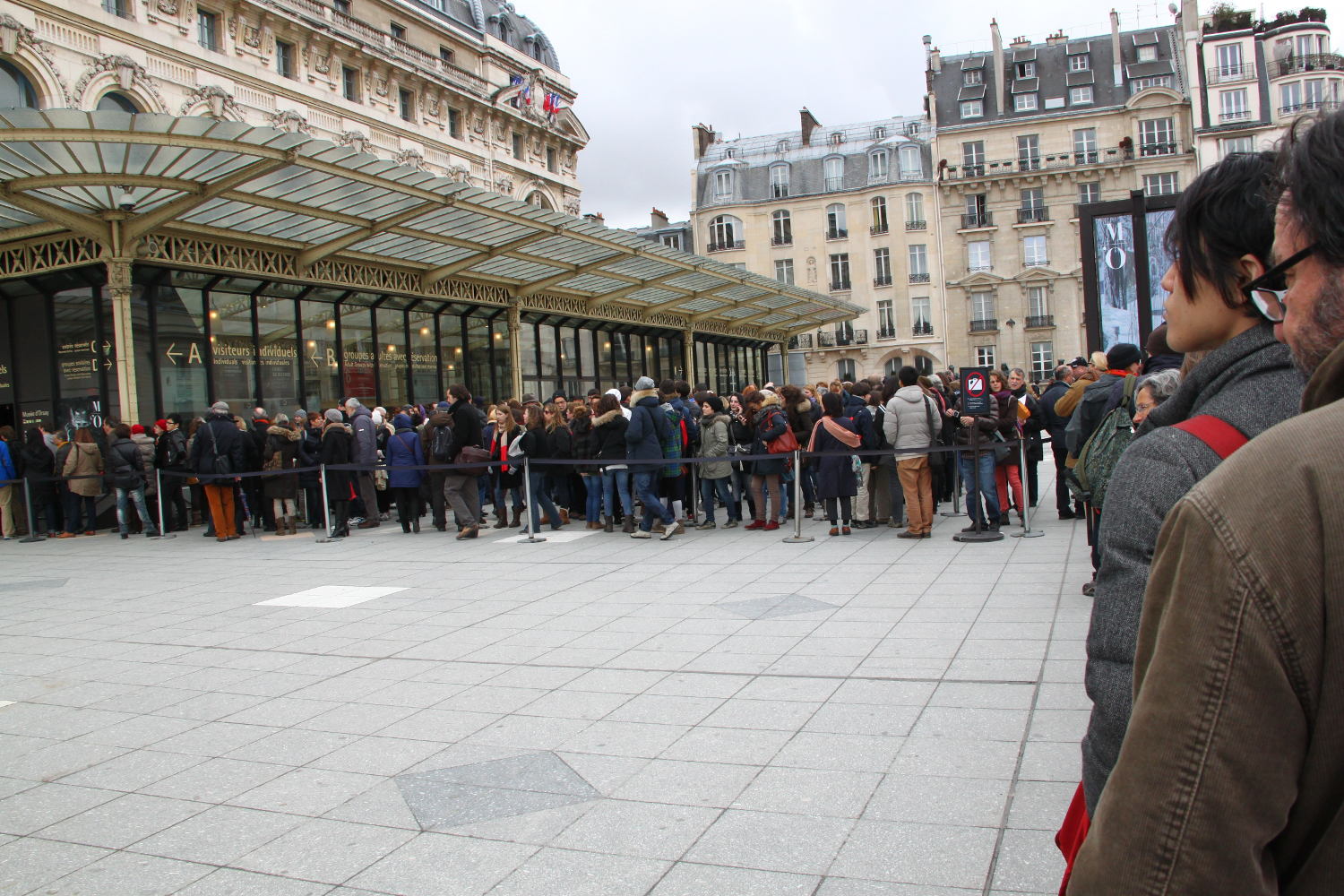
The Louvre is closed on Tuesdays, which may direct more museum visitors toward Orsay. That doesn’t prove every Tuesday will have the longest queue of the week, yet my experience is a useful warning: never presume that Musée d’Orsay will have short lines simply because it’s smaller than the Louvre.
Current renovation of the reception areas, scheduled to continue into summer 2028, also makes it important to check the entrance named on your ticket. The museum remains open, but access arrangements can change as the work progresses.
The Impressionist galleries were the reason I went
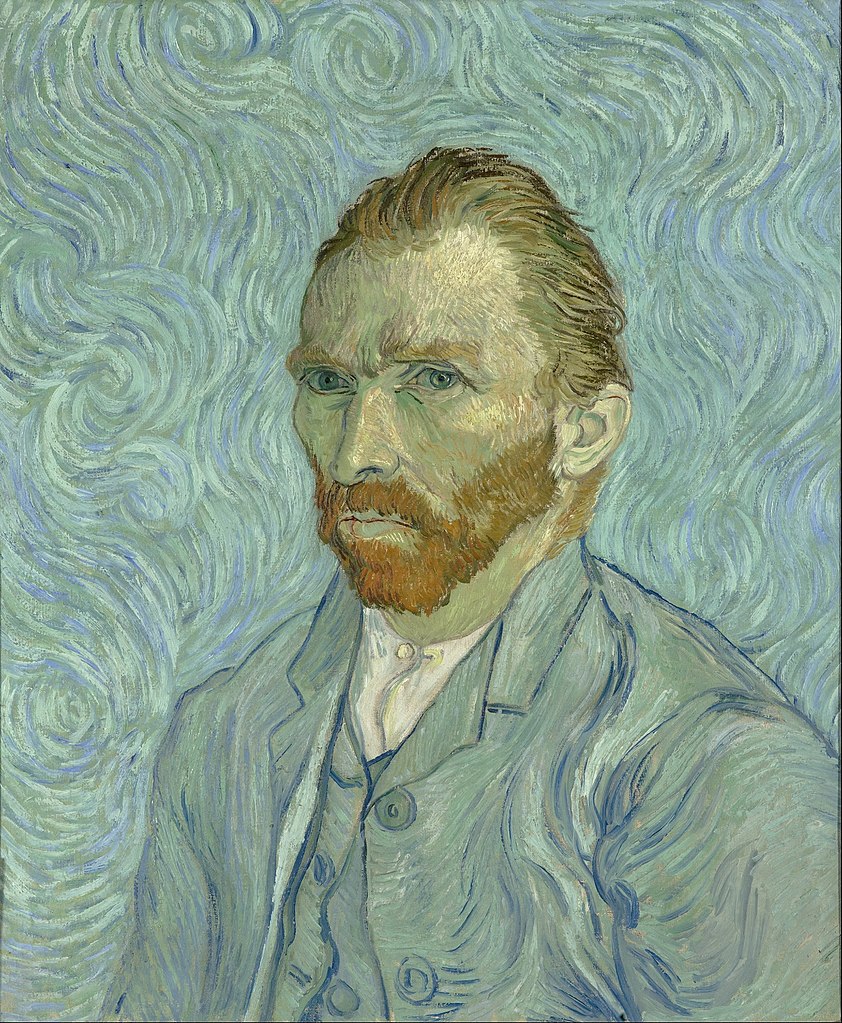
I had wanted to visit Musée d’Orsay from the moment I knew I was going to Paris.
I’m a huge admirer of Impressionism, and the opportunity to see so many original works in one museum was impossible to ignore. I had studied or seen reproductions of paintings by Monet, Manet, Degas, Renoir, Cézanne, Seurat, Sisley, Gauguin, and Van Gogh. Seeing them up close was completely different.
I began on the lower level, visited the rooms on both sides, and gradually moved upward, leaving the Impressionist galleries until later. In a way, I kept the part I expected to love most for the end.
I was enchanted when I reached it.
The concentration of famous artists isn’t the only advantage. You can see how their approaches differed, how subjects changed, and how light, color, brushwork, everyday life, landscapes, and portraits evolved across the period.
Someone who has seen only one Monet, one Renoir, or one Van Gogh in another museum may find the Orsay experience especially valuable. Here, the artists aren’t isolated names. Their works become part of a larger artistic transformation.
The gallery behind the enormous station clock adds another layer to the visit. You’re looking at nineteenth-century and early twentieth-century art inside a building that belonged to the same broad age of industrial and urban change.
Musée d’Orsay contains much more than Impressionism
Calling Orsay “the Impressionist museum” is understandable, but incomplete.
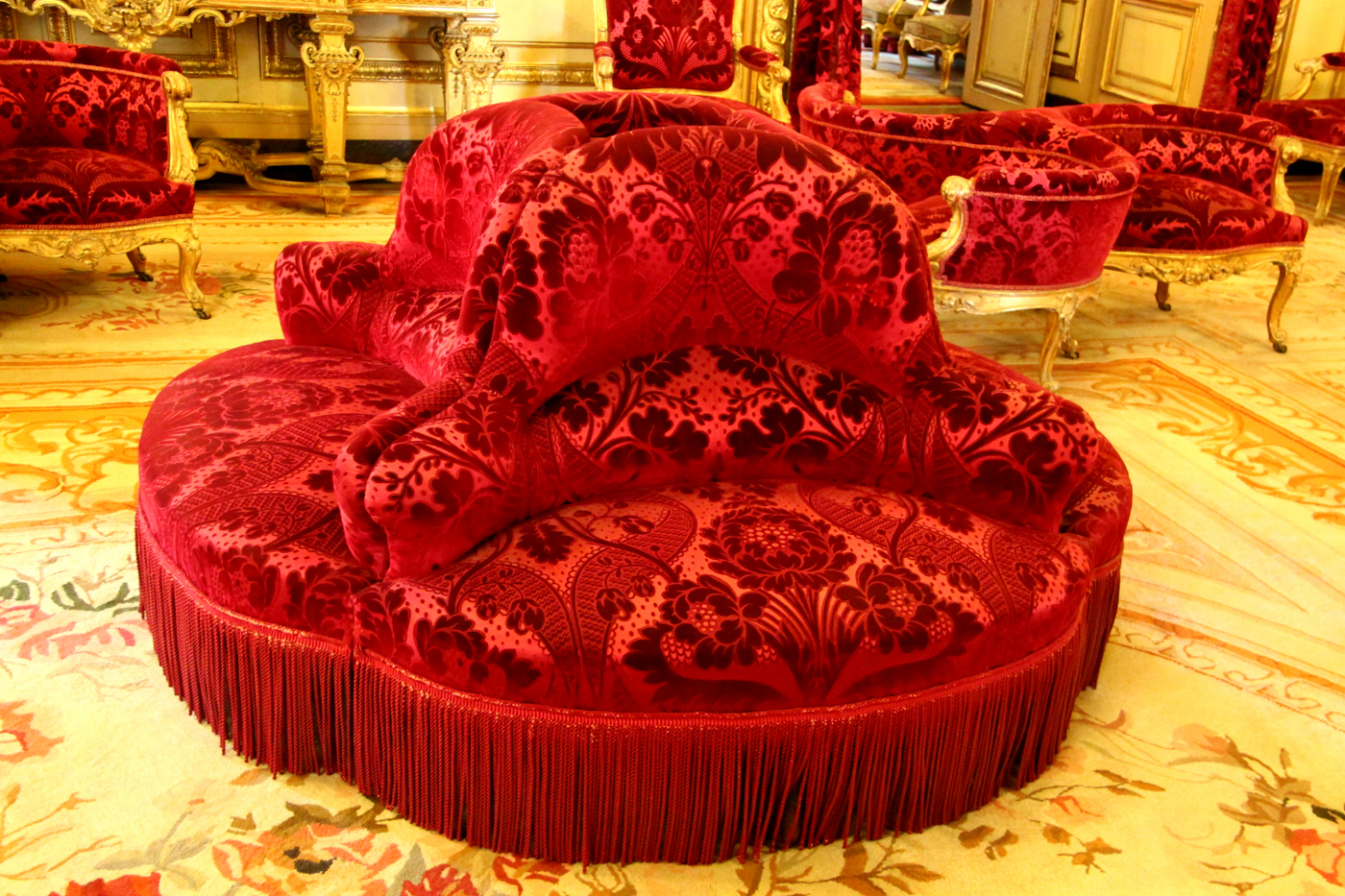
I also discovered sculptures, photography, decorative arts, furniture, interiors, architectural elements, and artists whose work I hadn’t known before. Some reconstructed interiors show how people furnished and decorated their homes during the period.
Rodin is represented, although travelers who want a deeper encounter with his work may also consider Musée Rodin. The central nave alone can keep sculpture lovers occupied for a substantial part of the visit.
Photography is another collection travelers may miss when they rush directly to the fifth floor. Musée d’Orsay was among the institutions that helped establish photography as an important part of museum collections rather than treating it only as documentation.
The temporary exhibitions also deserve consideration. They can significantly increase the time needed, particularly when the subject is one of your favorite artists.
My more detailed Musée d’Orsay tips cover the practical side of planning the visit, including tickets, security, timing, and what I wish I had known before arriving.
Can you see Musée d’Orsay in 90 minutes?
You can have a worthwhile 90-minute visit, especially when the main priority is the Impressionist and Post-Impressionist collection.
That isn’t the same as seeing the entire museum.
With the first timed entry, go directly to the galleries you care about most. Impressionism lovers may start on the fifth floor, then choose a few works by Van Gogh and other Post-Impressionists before seeing the clock and central nave.
A two-to-three-hour visit allows more context and less pressure. You can add sculpture, Realism, Symbolism, decorative arts, or another part of the collection that attracts you.
I spent most of a day there, and I still didn’t look closely at everything. An art lover could return and notice paintings, details, and entire rooms missed the first time.
Musée d’Orsay is more manageable than the Louvre. It isn’t a minor museum that should automatically be reduced to a quick stop.
Which Art Do You Really Want to See?
The most accurate Louvre or Musée d’Orsay recommendation begins with your interests.
Prestige won’t make you enjoy a collection that doesn’t appeal to you. A museum’s global fame also can’t compensate for skipping the artists you’ve dreamed of seeing in person.
Ancient history, archaeology, and civilizations
The Louvre is the clear choice for travelers interested in ancient Egypt, Mesopotamia, Greece, Rome, Near Eastern antiquities, and objects connected to early civilizations.
The Code of Hammurabi alone can be a major reason to visit. The Egyptian collections can occupy hours, while Greek sculpture includes far more than Venus de Milo.
Visitors who aren’t particularly interested in painting may still love the Louvre because so much of the museum isn’t built around paintings.
Renaissance and earlier European painting
Leonardo da Vinci and the Mona Lisa receive most of the attention, but the Louvre’s painting collection extends far beyond one work.
Italian, French, Spanish, Flemish, Dutch, and other European schools are represented. The enormous Wedding Feast at Cana faces the Mona Lisa in the Salle des États, yet many visitors turn around without giving it more than a glance.
The Louvre is a stronger match for travelers drawn to Renaissance art, religious painting, royal commissions, historical scenes, and work produced before the Impressionist era.
Impressionism and Post-Impressionism
Musée d’Orsay should be the priority when Monet, Manet, Degas, Renoir, Van Gogh, Cézanne, Gauguin, Seurat, and their contemporaries are the central reason for visiting a Paris art museum.
This recommendation becomes even stronger for someone who has never seen many original Impressionist works.
A reproduction can show composition and color. It can’t fully convey scale, texture, the surface of the paint, or the physical sensation of standing in front of the original.
Sculpture and decorative arts
Both museums can satisfy this interest, although the experience differs.
The Louvre offers a much broader historical range, including ancient sculpture, European works, royal interiors, jewelry, furniture, ceramics, and objects from several civilizations.
Orsay’s sculpture and decorative arts belong to a more concentrated era. They fit into the museum’s larger account of nineteenth-century artistic change.
Architecture and the building itself
Neither museum is simply a neutral container for art.
The Louvre is a former royal palace, and its long history remains visible in its façades, courtyards, grand rooms, and historical interiors. The Pyramid adds a striking contemporary contrast.
Orsay preserves the scale and atmosphere of a former railway station. The central nave and clocks are integral parts of the experience.
The Louvre offers the more monumental encounter. Orsay offers the more cohesive relationship between the collection and the period of its building.
How Much Time Do You Have?
Time changes the recommendation, although it shouldn’t automatically decide it.
With approximately 90 minutes
Musée d’Orsay generally delivers the more complete-feeling visit. You can see a carefully selected group of Impressionist and Post-Impressionist works, include the station clock, and pass through the central nave.
The Louvre can still be worthwhile when two or three specific masterpieces are non-negotiable. A 90-minute visit should remain tightly focused on one part of the museum.
With two to three hours
Orsay fits comfortably into this amount of time as a highlights visit. You won’t see everything, but you can explore the principal galleries without reducing the museum to a race between famous paintings.
At the Louvre, two or three hours can cover a highlights route or one main area of interest. It works best when the chosen pieces are located within a reasonably coherent path.
With four to six hours
This is enough for a strong Louvre visit built around several collections. It also gives you time to pause at favorite works rather than looking at each object for a few seconds.
At Orsay, four to six hours allow a broad visit incorporating paintings, sculpture, photography, decorative arts, the building, and perhaps a temporary exhibition.
With a full day
A full day at the Louvre can become an ambitious tour through most accessible areas, as mine did, or a slower visit focused on a smaller group of departments.
A full day at Orsay is particularly rewarding for someone deeply interested in Impressionism, Post-Impressionism, nineteenth-century culture, sculpture, and decorative arts.
Neither option wastes a day. The question is whether the museum should dominate your Paris itinerary or leave space for several other attractions.
Which Museum Requires More Walking and Energy?
The Louvre is more physically demanding for most visitors.
Its scale creates several forms of fatigue at once. There’s the walking itself, the movement between floors and wings, the need to check directions, the crowds around major works, and the continual decisions about what to see next.
Musée d’Orsay can also become tiring, especially during a long visit. Its popular upper galleries may be congested, and standing in front of paintings for several hours places its own demands on the body.
The difference is the amount of spatial and decision pressure.
At Orsay, you’re following a more concentrated period through a building that’s easier to understand. At the Louvre, every turn presents another possible route, era, or department.
Travelers with limited stamina will generally find Orsay easier. Travelers who don’t mind a full day of walking and discovery may see the Louvre’s scale as an advantage rather than an inconvenience.
Which Is More Crowded: the Louvre or Musée d’Orsay?
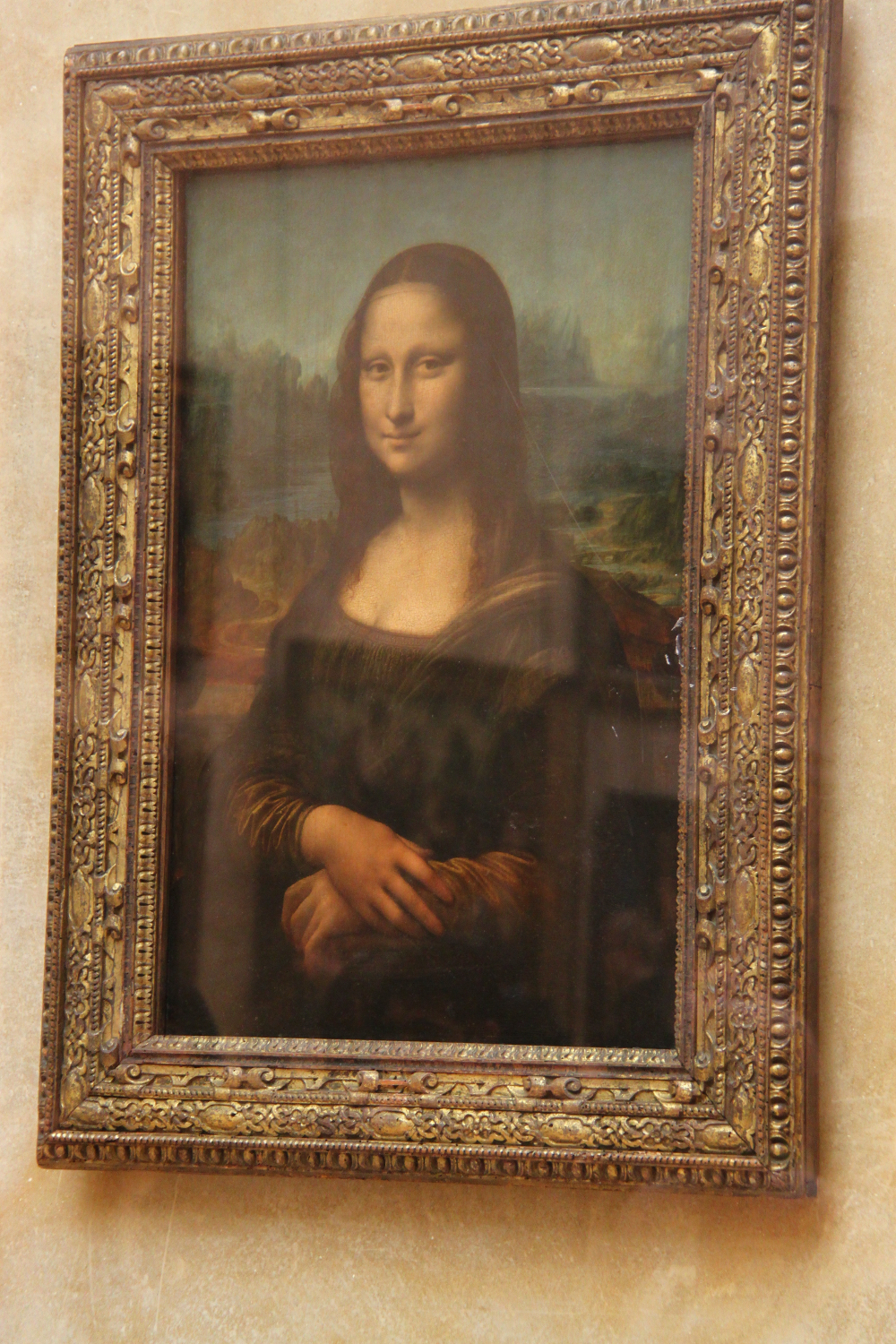
The Louvre attracts heavier visitor traffic overall and has more severe bottlenecks around its best-known works.
The Mona Lisa area is the obvious example. Visitors gather for photos, move slowly through the viewing area, and frequently concentrate on the painting while overlooking other major works in the room.
Musée d’Orsay is smaller, but its crowds are concentrated. The fifth-floor Impressionist galleries, famous clock viewpoints, and major temporary exhibitions can feel extremely busy.
My long Tuesday queue at Orsay removed any illusion that the museum is always the calmer alternative.
A timed ticket helps organize entry, but it doesn’t eliminate security checks or guarantee empty galleries. “Skip the line” should never be interpreted as permission to bypass required security procedures.
Opening time and late-evening visits often provide a better experience, although no hour comes with a crowd-free guarantee.
Which Museum Fits Better Into One Day in Paris?
This question has two separate interpretations.
Some people have one day in Paris and want to see as much of the city as possible. Others have several days in Paris but only one day available for a major museum.
The best recommendation changes accordingly.
When you want a museum plus several Paris attractions
Musée d’Orsay is easier to fit into a packed day.
Arrive for the first timed entry, spend approximately two to three hours inside, then continue along the Seine or cross toward the Tuileries and central Paris. The narrower museum visit leaves more time and physical energy for outdoor landmarks, neighborhoods, cafés, and evening activities.
My existing 24 hours in Paris itinerary demonstrates how much can be combined when museum visits are kept selective.
When the museum is one of the main reasons for visiting Paris
The Louvre can anchor the entire day.
You may spend several hours or most of the day inside, then continue through one of the most recognizable sequences of landmarks in Paris.
After leaving the museum, take time to see the palace and Pyramid from outside. Near the western side of the complex, pause at the smaller Arc de Triomphe du Carrousel, which many visitors pass without examining closely.
Continue into the Tuileries Garden. The garden adds fresh air, space, sculptures, ponds, and places to rest after hours inside the museum. Check the seasonal closing time before relying on an evening visit.
At the western end of the garden, you’ll reach Place de la Concorde and the Luxor Obelisk.
From there, continue along the Champs-Élysées. You can shop, stop for food, admire the buildings after dark, or walk toward the Arc de Triomphe.
Later in the evening, look for a view of the Eiffel Tower. Once its golden lighting has come on, it normally sparkles for five minutes at the beginning of each hour.
This route turns the Louvre into the beginning of a broader central Paris experience. It also includes several of the places many travelers place on a first Paris bucket list.
A compact Musée d’Orsay-centered Paris route
Begin at Musée d’Orsay when it opens and prioritize the collections you care about most. After two or three hours, take a proper lunch break rather than rushing directly into another attraction.
You can then walk along the Seine, cross toward the Tuileries, see the Louvre’s exterior and Pyramid, and continue toward Place de la Concorde.
Depending on the remaining time and energy, continue along the Champs-Élysées, visit another smaller museum, explore a neighborhood, or end the day near the Eiffel Tower.
Orsay is the more flexible anchor. The Louvre is the more dominant one.
Which Museum Should You Choose in These Situations?
By this point, the choice should be taking shape. These specific scenarios can settle the decision when several considerations still pull in opposite directions.
You’re a major Impressionism fan
Musée d’Orsay is the natural recommendation, particularly when you haven’t previously seen many original works by the artists represented there.
The museum provides depth and context that a scattered group of Impressionist paintings in a general collection can’t reproduce.
You aren’t particularly interested in Impressionism
Choose the Louvre.
Its variety gives you far more alternatives, including archaeology, ancient civilizations, sculpture, Renaissance painting, Islamic art, jewelry, furniture, historic interiors, and decorative objects.
You have only 90 minutes
Orsay usually provides a more satisfying short museum experience.
The Louvre remains worthwhile when seeing specific works such as the Mona Lisa, Winged Victory, Venus de Milo, or the Code of Hammurabi is a personal priority.
You have four to six hours
Personal interests become more important than museum size.
Four to six hours are enough for a substantial Orsay visit or a selective Louvre visit covering several departments.
You want to see several other places in Paris that day
Orsay fits the schedule more easily.
A focused two-to-three-hour visit leaves room for walks, gardens, shopping, landmarks, meals, and an evening itinerary.
You want the museum to be the main event
The Louvre can occupy the day without feeling like a compromise.
The palace, Pyramid, collections, exterior, Tuileries, and nearby monuments create an experience that continues after you leave the galleries.
This is your first visit to Paris
The Louvre is the more iconic first-visit choice, particularly for travelers who would regret missing the Pyramid, palace, Mona Lisa, or ancient collections.
Orsay is the stronger first choice when Impressionism is the main reason you visit art museums.
My overview of the city’s major Paris landmarks can help determine how either museum fits around the rest of your priorities.
You’ve visited the Louvre before
Choose Musée d’Orsay unless a specific Louvre department calls you back.
A repeat Louvre visit can be excellent when you deliberately explore collections missed or rushed the first time.
You don’t usually enjoy art museums
The answer depends on what you enjoy instead.
History and archaeology enthusiasts may find the Louvre far more engaging than a painting-focused museum. Travelers who recognize Van Gogh, Monet, and Renoir and prefer a shorter, more coherent visit may connect more easily with Orsay.
You dislike crowds
Neither museum guarantees a calm visit.
Orsay is usually easier to manage outside its busiest galleries. The Louvre has more severe crowd concentrations, particularly around its most famous masterpieces.
You’re traveling with young children
Choose according to interest and attention span.
Ancient Egypt, monumental sculptures, palace rooms, and mythological figures may hold a child’s attention at the Louvre. Orsay’s smaller scope may be easier for children who tire quickly.
A short, purposeful route is preferable to forcing a child through an entire museum simply because the ticket has been purchased.
You’re visiting with teenagers
Teenagers interested in history, Egypt, mythology, famous icons, or archaeology may favor the Louvre.
Those drawn to Van Gogh, modern life, portraits, changing fashions, city scenes, and recognizable nineteenth-century art may prefer Orsay.
You have limited stamina or mobility
Musée d’Orsay is generally the easier museum to navigate and requires less extensive movement between distant collections.
Both museums provide accessibility services, elevators, and mobility equipment, but the Louvre’s distances remain an important factor.
You may never return to Paris
Think about regret rather than rankings.
Which absence would bother you more afterward: never having seen the Louvre and its Pyramid, or never having stood in front of the Impressionist works at Orsay?
The answer may be clearer than any universal recommendation.
Can You Visit the Louvre and Musée d’Orsay on the Same Day?
Yes, but both visits must be selective unless you’re prepared for an unusually intense museum day.
The museums are within walking distance of one another, separated by the Seine. Their proximity makes the combination look easier on a map than it may feel after several hours inside the first museum.
A Thursday can work well with the Louvre earlier in the day and Musée d’Orsay during its late opening. On Wednesday or Friday, Orsay can come first and the Louvre can follow during its evening hours.
Have a proper meal and a period of rest between them. Avoid treating the walk across the river as the only break.
Visit the museum you care about most first, while your attention and energy are strongest. The second should be treated as a highlights visit.
Families with small children, travelers with limited stamina, and serious art lovers who enjoy reading labels and lingering in galleries will probably have a better experience on separate days.
Several practical mistakes can drain time on a first Paris trip, so it’s worth reviewing broader Paris travel tips before placing two major museums into the same schedule.
Current Ticket Prices: Louvre vs Musée d’Orsay
Prices checked in July 2026.
The official Louvre rates are €22 for eligible EEA visitors and €32 for visitors who are neither residents nor citizens of the European Economic Area.
Most adult visitors from the United States, Canada, the United Kingdom, and Australia therefore pay €32.
This pricing change took effect in January 2026 and is explained in more detail in my article about the Louvre ticket price.
The official Musée d’Orsay information currently lists general admission at €16 online or €14 at the museum. The Thursday evening rate, for visits beginning at 6 p.m., is €12 online or €10 at the museum.
For most American adults buying online, Orsay currently costs half the Louvre admission price.
That doesn’t automatically make it the better value. Value depends on the collections you want to see and the importance of the museum within your trip.
Is the Paris Museum Pass Worth It for the Louvre and Orsay?
The two-day Paris Museum Pass currently costs €85.
For a non-EEA adult, separate online tickets to the Louvre and Musée d’Orsay cost €48 in total: €32 plus €16.
Buying the pass only for these two museums would therefore cost €37 more than purchasing the tickets separately.
The pass becomes more useful when the same 48-hour period includes several additional paid museums or monuments. The official pass site indicates that savings generally begin around the fourth visit.
The pass permits one admission to each included site. It doesn’t provide unlimited re-entry, and it doesn’t remove time-slot requirements.
During the current Musée d’Orsay reception renovation, Paris Museum Pass holders need a timed reservation. Louvre reservations are also advisable and become mandatory for most visitors during designated high-demand periods.
Louvre vs Musée d’Orsay at a Glance
| Question | Louvre | Musée d’Orsay |
|---|---|---|
| Main period | Ancient civilizations and Western art through approximately 1848 | Art from 1848 to 1914 |
| Best known for | Mona Lisa, ancient Egypt, Code of Hammurabi, Venus de Milo, Winged Victory | Impressionism, Post-Impressionism, Monet, Van Gogh, Renoir, Degas |
| Overall experience | Vast, varied, monumental, demanding | Focused, coherent, easier to navigate |
| Good visit length | Four hours to a full day, depending on priorities | Two hours to a full day, depending on interest |
| Best short visit | A tightly planned highlights route | Impressionist highlights plus the clock and central nave |
| Walking and navigation | Extensive | More manageable |
| Crowds | Heavier overall, with severe bottlenecks | Busy around popular galleries and exhibitions |
| 2026 online adult price for most U.S. visitors | €32 | €16 |
| Closed | Tuesday | Monday |
| Late opening | Wednesday and Friday until 9 p.m. | Thursday until 9:45 p.m. |
| Best for a packed one-day Paris itinerary | Possible with a selective route | Easier to combine with other attractions |
One More Way to Decide Before Booking
Spend a little time looking at both museums’ online collections before buying a ticket.
Don’t limit the preview to the Mona Lisa and the most famous Impressionist paintings. Look through the departments, search for favorite artists, and notice which images make you stop.
The Louvre and Orsay both provide digital access to parts of their collections, and this collection of virtual museum tours offers another way to preview major European museums before traveling.
You may discover that the museum you expected to choose isn’t the one whose collection holds your attention.
What I Would Do on My Next Visit
I would return to both museums.
At the Louvre, I would again reserve a substantial amount of time, but I would plan the route around a smaller number of departments I want to study more closely. I’d revisit the Greek sculptures, ancient collections, decorative arts, jewels, and rooms I passed through too quickly.
I would still see the famous masterpieces, but I wouldn’t allow the Mona Lisa crowd to dictate the rest of the visit.
At Musée d’Orsay, I would avoid relying on Tuesday as a less crowded alternative. I’d reserve the first available entry or use the Thursday evening opening, then revisit the Impressionist galleries and spend more time with the collections I discovered only after arriving.
Photography rules have changed since my first visit. Private photographs are now permitted in the permanent galleries without flash, tripods, or mounts unless a particular work or exhibition has additional restrictions. I would certainly return with more visual memories than I was able to take home the first time.
I’d also leave enough time to stand behind the great clock again and look across Paris.
My Honest Verdict After Visiting Both
Musée d’Orsay is one of my favorite museums in Paris and one of the most memorable art museums I’ve visited.
I’m a huge Impressionism fan. Seeing original works by Monet, Manet, Degas, Renoir, Cézanne, Seurat, Sisley, Gauguin, and Van Gogh was an experience I had long wanted. The museum’s former railway-station setting made the day even more special.
I loved the Louvre too. I loved its variety, the ancient civilizations, the Greek sculptures, the Code of Hammurabi, the Egyptian objects, the paintings, the historic rooms, the jewels, and the sense that every wing could lead to another completely different part of human history.
Both museums are extraordinary. Both are worthy of a place in a Paris itinerary. The choice between them is personal.
Yet if I could return to only one, I would choose the Louvre.
That may sound surprising given how much I love Impressionism. My decision comes from the breadth of the experience. The Louvre allows me to move between art, archaeology, history, civilizations, sculpture, jewelry, architecture, and the palace itself.
Even a rushed Louvre visit can give me several experiences within one museum. I can select the works that interest me most, enjoy the exterior and Pyramid, and then continue through the Tuileries, Place de la Concorde, the Champs-Élysées, and the illuminated city.
Someone whose greatest artistic passion is Impressionism may reach the opposite conclusion. A traveler with only two hours may enjoy Orsay far more. A visitor who dislikes painting but loves Egypt or ancient history may have no difficulty choosing the Louvre.
My preference doesn’t turn the Louvre into the universal winner. It reveals what I value most in a museum visit.
That is also the best way to make your own choice.
Conclusion
Choose Musée d’Orsay when Impressionism and Post-Impressionism are among your strongest interests, especially when you haven’t seen many original works by the artists represented there. Its more manageable size also makes it easier to combine with several other Paris attractions in the same day.
Choose the Louvre when you want artistic and historical variety, aren’t especially interested in Impressionism, or consider ancient Egypt, Mesopotamia, Greek sculpture, Renaissance painting, the Mona Lisa, the palace, or the Pyramid essential parts of your Paris experience.
With limited time, either museum can work. At Orsay, you can create a satisfying two-hour visit. At the Louvre, you can select the sections and masterpieces that interest you most rather than trying to give every room equal attention.
I loved both. I would recommend both. Given only one choice, I would return to the Louvre—but your ideal museum may be Musée d’Orsay, and now you have the information needed to recognize it.
Common Questions About Choosing Between the Louvre and Musée d’Orsay
Is Musée d’Orsay better than the Louvre?
Neither museum is universally better. Musée d’Orsay is the stronger choice for Impressionism, Post-Impressionism, and a more manageable visit. The Louvre is stronger for ancient civilizations, sculpture, Renaissance art, decorative objects, historic interiors, and artistic variety.
Which museum is better for first-time visitors to Paris?
The Louvre is the more iconic first-visit choice. Musée d’Orsay may be the better personal choice for travelers whose main interest is Impressionism or who want a shorter museum visit that leaves time for several other Paris attractions.
Which museum should I visit if I only have one day in Paris?
Musée d’Orsay fits more easily into a one-day itinerary because a focused two-to-three-hour visit can feel satisfying. Choose the Louvre instead when it is one of your main reasons for visiting Paris and you would regret missing it.
Which museum is better for Impressionist art?
Musée d’Orsay is the clear choice. Its collections place Monet, Manet, Renoir, Degas, Van Gogh, Cézanne, Gauguin, Seurat, and other artists within the wider development of nineteenth-century art.
Which museum should I choose if I don’t like Impressionism?
The Louvre offers considerably more variety, including ancient Egypt, Mesopotamia, classical sculpture, Islamic art, Renaissance painting, decorative arts, jewelry, and historic palace rooms.
Which museum requires less walking?
Musée d’Orsay generally requires less walking and is easier to navigate. The Louvre’s three wings, multiple levels, long corridors, and distances between collections make it more physically demanding.
Which museum can I visit more quickly?
Musée d’Orsay is easier to experience in 90 minutes to three hours. A short Louvre visit can still be valuable, but it requires a carefully selected route built around a few works or one department.
Is Musée d’Orsay crowded on Tuesdays?
It can be. The Louvre is closed on Tuesdays, and some visitors redirect their museum plans toward Orsay. I personally encountered a very long Tuesday queue. Crowd levels still vary by date, season, exhibitions, and time of day.
Can I visit the Louvre and Musée d’Orsay on the same day?
Yes, provided both are selective visits. Visit the priority museum first, take a substantial break, and use an evening opening when possible. Separate days are preferable for travelers who want to explore either museum slowly.
Which museum should I visit first?
Visit the Louvre first to follow art and history broadly from ancient civilizations through 1848, then continue chronologically at Orsay. Visit Orsay first when you prefer an easier introduction to Paris museums. On a same-day itinerary, place your personal favorite first.
Is the Paris Museum Pass worth buying for both museums?
Not for these two museums alone. In July 2026, separate online tickets for a non-EEA adult total €48, while the two-day pass costs €85. The pass becomes more useful when the itinerary includes several additional paid museums and monuments.
Which museum is better with children?
The Louvre may appeal to children fascinated by ancient Egypt, mythology, palaces, and monumental sculpture. Orsay’s smaller scope may work better for shorter attention spans. In either museum, a focused route is more successful than attempting every gallery.
Is Musée d’Orsay worth visiting after the Louvre?
Yes. The collections are complementary rather than repetitive. The Louvre broadly covers Western art through 1848 alongside ancient civilizations, while Orsay focuses on art from 1848 to 1914.
Is the Louvre worth visiting for only two hours?
Yes, when you select a small number of priority works or one coherent section in advance. Two hours aren’t enough for the entire museum, but they can provide a memorable encounter with several masterpieces.
How far apart are the Louvre and Musée d’Orsay?
The museums are on opposite sides of the Seine and within walking distance of one another. The exact walking time depends on the entrances used and your route, but combining them doesn’t require crossing the city.
Photo sources: 1, 2 – public domain photo on Wikipedia, 3
More amazing articles for you:

Violeta-Loredana Pascal is a communications expert, business mentor, and the founder of Earth’s Attractions and PRwave INTERNATIONAL. A pioneer in the Romanian digital PR landscape since 2005, she holds a degree in Communication and Social Sciences from SNSPA Bucharest. Violeta is a senior trainer at AcademiadeAfaceri.ro, where she leverages over 20 years of experience to teach professional courses in PR strategy and workplace productivity. By blending high-level business consulting with a passion for holistic travel and wellness, she empowers solopreneurs to overcome procrastination, build profitable brands, and design a life of purposeful adventure.