This Spanish Resort Is Cracking Down on the ‘Towel War’ – Tourists Could Return to Find Their Beach Gear Gone
This post may contain affiliate links. If you click on one and make a purchase, I might earn a small commission (at zero extra cost to you), which helps me keep this blog running.
I’ve seen plenty of arguments about people placing towels on hotel loungers and disappearing for hours. Few people expect the same dispute to follow them onto a public beach.
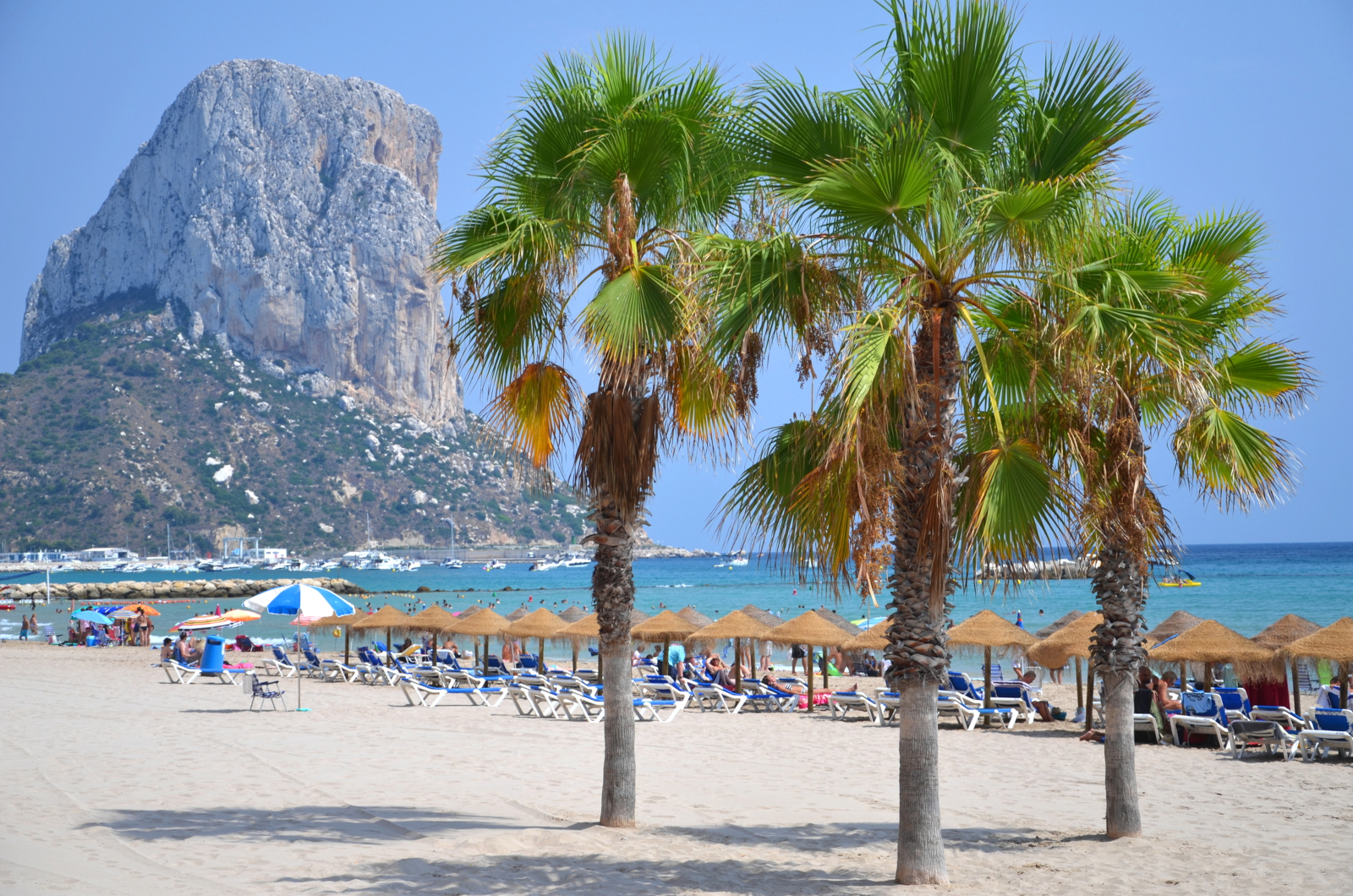
In Calpe, a popular resort on Spain’s Costa Blanca, leaving chairs, loungers, parasols and other beach equipment on the sand to claim a prime position can have an unexpected result: municipal workers or the Local Police may remove the items and take them to a municipal depot.
And there is a rule about smoking too – all the details are below!
ID 26470909 | Calpe ©Dariusz Szwangruber | Dreamstime.com
The rule about the items left on the beach is particularly strict early in the morning. Beach equipment installed before 9:30 a.m. may be removed, and its owner may be reported.
Even after 9:30, chairs, loungers and parasols left without their owners for more than three hours can also be taken away.
So, would you still leave your umbrella in the front row and head back to your hotel for breakfast?
Btw: if you haven’t chosen your Spain destination yet, here are the 100 things to do and places to visit in Spain 🙂 I also have 50 surprising facts about Spain for you, and for a little bit of wisdom, here are 150 Spanish proverbs and sayings with translation in English and meaning:)
What the Calpe Beach Rule Actually Says
Calpe’s municipal rule prohibits people from installing chairs, loungers or parasols before 9:30 a.m. when the equipment could interfere with beach cleaning.
According to the official notice published by Calpe Town Council, items placed on the beach before that time may be removed and their owners reported.
The rule also covers equipment left unattended for more than three hours during the day. When municipal staff find chairs, loungers or parasols without an identifiable owner nearby, the items may be taken to the municipal depot.
This goes beyond temporarily stepping into the water, buying a drink or taking a short walk along the shore. The council is targeting beach spaces occupied for long periods by equipment while nobody is using them.
Is Calpe Really Confiscating Tourists’ Towels?
The viral version of the story is usually described as a ban on reserving beach spots with towels.
The official municipal notice is more specific. It explicitly names chairs, loungers and parasols, followed by broader references to equipment installed on the beach. It doesn’t say that every towel left alone for a few minutes will automatically be seized.
Calling it a “towel confiscation rule” makes a striking headline, but tourists should understand what the municipality is addressing: people arriving early, placing beach equipment across valuable areas of sand and then leaving for an extended period.
Municipal employees and the Local Police have the authority to remove the equipment. Recovering it may then require a visit to the municipal depot rather than a simple walk back to the beach.
Oh, did you read this article about the tourist who decided to get revenge on people who block sunbeds with towels?
This Isn’t a New Nationwide Spanish Law Introduced in 2026
The rule is real, but it wasn’t suddenly introduced across Spain for summer 2026.
Calpe has reminded beachgoers about the restriction during previous summer seasons. The council’s published notice describes it as a reminder issued every summer, rather than a newly created national law.
Spain’s beaches are part of the public coastal domain, but many day-to-day restrictions are established and enforced locally. Calpe, Alicante, Benidorm, Málaga, Palma and other coastal destinations can have different rules covering smoking, alcohol, pets, beach access, music, cleaning hours and unattended equipment.
This is one reason it helps to check the current things to know before visiting Spain as well as the signs displayed at the particular beach you plan to use.
A rule enforced in one Spanish municipality may not exist in the town immediately along the coast.
Why Calpe Doesn’t Want Beach Equipment Placed Before 9:30
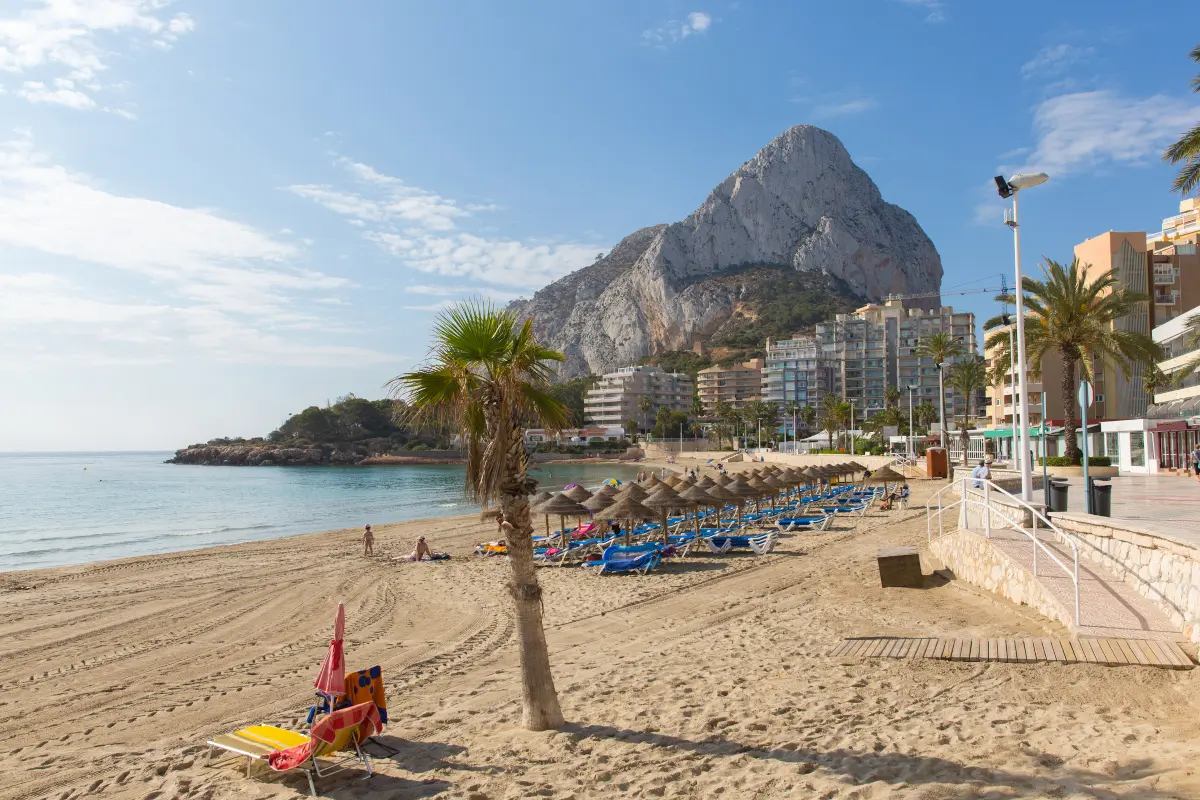
ID 121111409 | Calpe ©Acceleratorhams | Dreamstime.com
The municipality gives two main reasons for the restriction.
First, chairs, loungers and parasols can obstruct the machines and workers responsible for cleaning the beaches in the morning.
Second, the council has received complaints about substantial areas of sand appearing occupied even though the owners of the equipment are nowhere nearby.
Visitors arriving later in the morning may find row after row of apparently reserved places while very few people are actually sitting there.
The rule is intended to keep the cleaning route clear and prevent individuals from treating part of a public beach as their private space for the day.
Calpe Has Also Restricted Smoking on Its Beaches
Reserving space isn’t the only beach habit regulated in Calpe.
Smoking is now restricted across the municipality’s beaches and coves, with two designated smoking areas provided on its largest beaches.
One is located at La Fossa, near Plaza Mediterrani. The other is at Arenal-Bol, opposite Plaza Colón.
Smoking is permitted inside these marked areas, but visitors are required to use reusable ashtrays. Calpe introduced the measure partly to reduce the number of cigarette butts left in the sand and coastal environment.
The details appear in the town council’s official announcement about its smoke-free beaches.
Spain hasn’t imposed a blanket nationwide smoking ban on every beach and every outdoor terrace. National proposals, regional requirements and municipal rules are frequently mixed together in travel reports. The current position is explained in this guide to Spain’s smoking restrictions for beaches, terraces and outdoor spaces.
Alicante Also Prohibits Reserving Beach Space With Unattended Equipment
Calpe isn’t the only Costa Blanca destination with a rule addressing beach-space reservations.
In Alicante, visitors aren’t allowed to leave parasols, chairs, tables or similar accessories on the beach when their owners aren’t present and the sole purpose is to reserve a place.
The official Alicante beach ordinance allows municipal employees or the Local Police to remove irregularly installed items and deposit them at municipal facilities.
Owners may be asked to prove that the equipment belongs to them before it is returned. A sanction may also have to be paid where one has been imposed.
Alicante classifies leaving equipment unattended solely to reserve a beach position as a minor infringement. Under the ordinance’s general penalty scale, minor infringements can carry fines of up to €750.
That figure is the maximum range for the category, not an automatic €750 fine handed to every person who walks away from a chair.
Other Alicante Beach Rules Tourists May Not Expect
Alicante’s beach ordinance contains several restrictions that vacationers can easily overlook.
You Can’t Use Soap or Shampoo in Beach Showers
Beach showers and foot-washing stations are intended for rinsing off water and sand. Visitors aren’t permitted to use soap, shower gel, shampoo or other detergents in them.
The same restriction applies to washing with these products in the sea or directly on the beach.
A quick attempt to turn a beach shower into a full outdoor shower could therefore be treated as a minor infringement.
Alcohol Is Restricted on the Beach
Alicante’s ordinance prohibits the unauthorised sale, supply and consumption of alcohol on beaches, coves, promenades and adjacent pedestrian areas.
Licensed beach bars and other specifically authorised spaces are treated separately. Bringing drinks from a shop and holding a beach drinking party is not the same as ordering a drink from an authorised establishment.
The activity commonly known in Spain as a botellón—a group gathering to drink alcohol bought elsewhere—is expressly prohibited on Alicante’s beaches, coves and adjoining areas.
Glass Containers Are Not Allowed on the Sand
Glass bottles and containers can create an obvious hazard when they break, which is why Alicante prohibits visitors from bringing them onto its beaches and into designated swimming areas.
Drinks sold inside authorised beach establishments may have different arrangements, but glassware from those businesses must remain inside their permitted concession areas.
Cooking, Fires and Camping Are Prohibited
Visitors can’t cook on Alicante’s beaches or light fires directly on the sand, rocks or stones without specific authorisation.
Gas cylinders and flammable liquids are also restricted. Camping and installing tents on the beach are prohibited throughout the year, regardless of how short the intended stay may be.
Loud Music Can Lead to Problems
Playing music isn’t automatically forbidden, but using a speaker or musical instrument loudly enough to disturb other beachgoers is classified as an infringement.
Volume that feels acceptable to one group may be unbearable to the family, couple or older visitors sitting a few metres away.
Why Tourists Need to Check the Particular Beach, Not Just the Country
Search for “Spain beach rules,” and you’ll often find different local restrictions blended into one supposed national list.
A smoking rule from Calpe, an alcohol restriction from Alicante and a swimwear ordinance from a Balearic resort may be presented as though every one of them applies on every Spanish beach.
They don’t.
Before settling on the sand, look for the information boards near the entrance. They may show rules covering smoking, dogs, glass containers, water sports, fishing, nighttime access, nudism, protected dunes, cleaning periods and permitted swimming zones.
Rules may also change according to the season, the section of the beach or whether the beach is located inside a protected natural area.
The easiest way to avoid an unpleasant surprise is to check the municipality’s tourism or council website and read the signs at the beach itself. A wider overview of tourist fines and local rules in Europe can also help when a vacation includes more than one country.
Spain Isn’t the Only Country Regulating Towels and Sunbeds
The debate over towels, beach access and space on the sand extends well beyond the Costa Blanca.
At La Pelosa in Sardinia, visitors need a reservation during the controlled season, and a towel can’t be placed directly on the sand. A suitable mat must sit underneath it, helping to reduce the amount of protected sand carried away in fabric.
The full requirements – including reservations, the visitor limit, the mat rule, parking and protected dunes – are covered in these La Pelosa Beach rules for 2026.
Taking sand, stones or shells home can also create serious problems in protected coastal destinations. What looks like a harmless souvenir may be legally protected, and it can become one of the surprising items you aren’t allowed to put in your luggage.
Italy’s coastal restrictions can continue after visitors leave the sand. Several municipalities regulate walking through streets, shops and historic centres in swimwear, as explained in this guide to places where beachwear can lead to a fine.
Even building on the sand isn’t always as harmless as it appears. Large structures, deep holes and commercial sand figures may interfere with cleaning, emergency access or other beach users, which has led to restrictions on sandcastles and sand structures in parts of Europe.
Greece Has Taken a Different Approach to Beach Access
Greece has introduced extensive protections for hundreds of sensitive beaches, restricting commercial activity and, on certain highly protected stretches, limiting or excluding organised sunbeds and umbrellas.
This shouldn’t be confused with a general ban on tourists bringing an ordinary towel. The Greece sunbed restrictions primarily regulate commercial beach occupation and protected areas.
Travelers planning a longer Greek vacation should also check the wider Greece travel rules for 2026, including beach regulations, accommodation fees, ferries and entry requirements.
Beachwear Rules Can Follow You Away From the Beach
A towel or swimsuit may be perfectly acceptable beside the sea and inappropriate one street later.
That principle appears in destinations far beyond Spain and Italy. Dubai permits swimwear at beaches and pools, but visitors are expected to dress appropriately when entering malls, restaurants and other public places. The wider Dubai travel laws tourists should know cover clothing, alcohol, photography, public behaviour and social media.
The rules may sound unusual to visitors, yet they are local laws and bylaws rather than suggestions. Many of the world’s most surprising travel laws regulate ordinary actions people would never think to research before a vacation.
Conclusion
Calpe hasn’t introduced a new nationwide Spanish “towel ban” for summer 2026. It has a local rule that allows chairs, loungers, parasols and other equipment to be removed when they are installed before 9:30 a.m. or left without their owners for more than three hours.
The equipment may be taken to a municipal depot, and the owner may be reported.
Alicante has its own rule against using unattended beach equipment to reserve space, alongside restrictions covering alcohol, glass containers, soap in beach showers, cooking, fires, camping and excessively loud music.
The practical lesson is simple: placing your belongings on the sand doesn’t turn that part of a public beach into your reserved area for the day.
Before leaving a chair, umbrella or bag behind, check the signs. Otherwise, you may return from breakfast to find an empty patch of sand—and discover that somebody didn’t steal your equipment. The municipality removed it.
Frequently Asked Questions About Spain’s Beach-Spot Rules
Can tourists reserve a beach spot with a towel in Spain?
There is no single nationwide rule governing every Spanish beach. In municipalities such as Calpe and Alicante, leaving beach equipment unattended to reserve a space can result in its removal and a possible sanction.
What time can you put an umbrella on the beach in Calpe?
Calpe prohibits installing chairs, loungers and parasols before 9:30 a.m. because they can interfere with municipal beach cleaning.
Can Calpe remove beach equipment later in the day?
Yes. Chairs, loungers and parasols left for more than three hours without their owners present may be removed and taken to the municipal depot.
Are all Spanish beaches smoke-free?
No. Spain hasn’t imposed a nationwide smoking ban covering every beach. Municipalities and autonomous communities may establish local restrictions. Calpe restricts smoking across its coastline except in two designated areas at La Fossa and Arenal-Bol.
Can you drink alcohol on Spanish beaches?
The rules depend on the municipality and the location. Alicante prohibits unauthorised alcohol consumption on beaches, coves and adjoining public areas while allowing licensed establishments to operate under their permits. Visitors should check the rules displayed at the specific beach.
Will police take an unattended towel in Calpe?
The official Calpe notice specifically names chairs, loungers and parasols and refers more broadly to beach equipment. It doesn’t state that every towel left briefly unattended will automatically be removed. Reports describing the rule as a “towel ban” simplify the official wording.
More amazing articles for you:

Violeta-Loredana Pascal is a communications expert, business mentor, and the founder of Earth’s Attractions and PRwave INTERNATIONAL. A pioneer in the Romanian digital PR landscape since 2005, she holds a degree in Communication and Social Sciences from SNSPA Bucharest. Violeta is a senior trainer at AcademiadeAfaceri.ro, where she leverages over 20 years of experience to teach professional courses in PR strategy and workplace productivity. By blending high-level business consulting with a passion for holistic travel and wellness, she empowers solopreneurs to overcome procrastination, build profitable brands, and design a life of purposeful adventure.